

Vilhelm Lauritzen
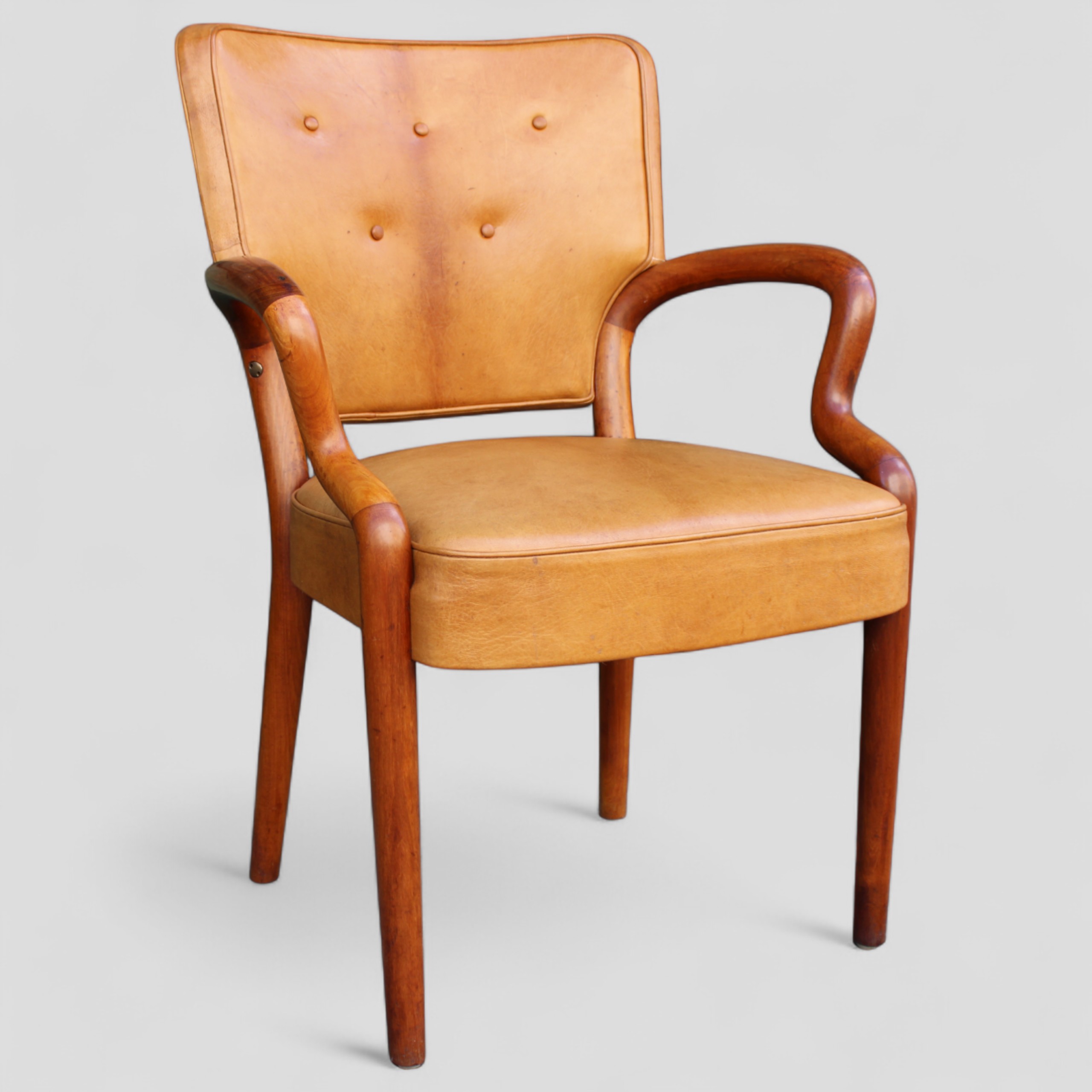
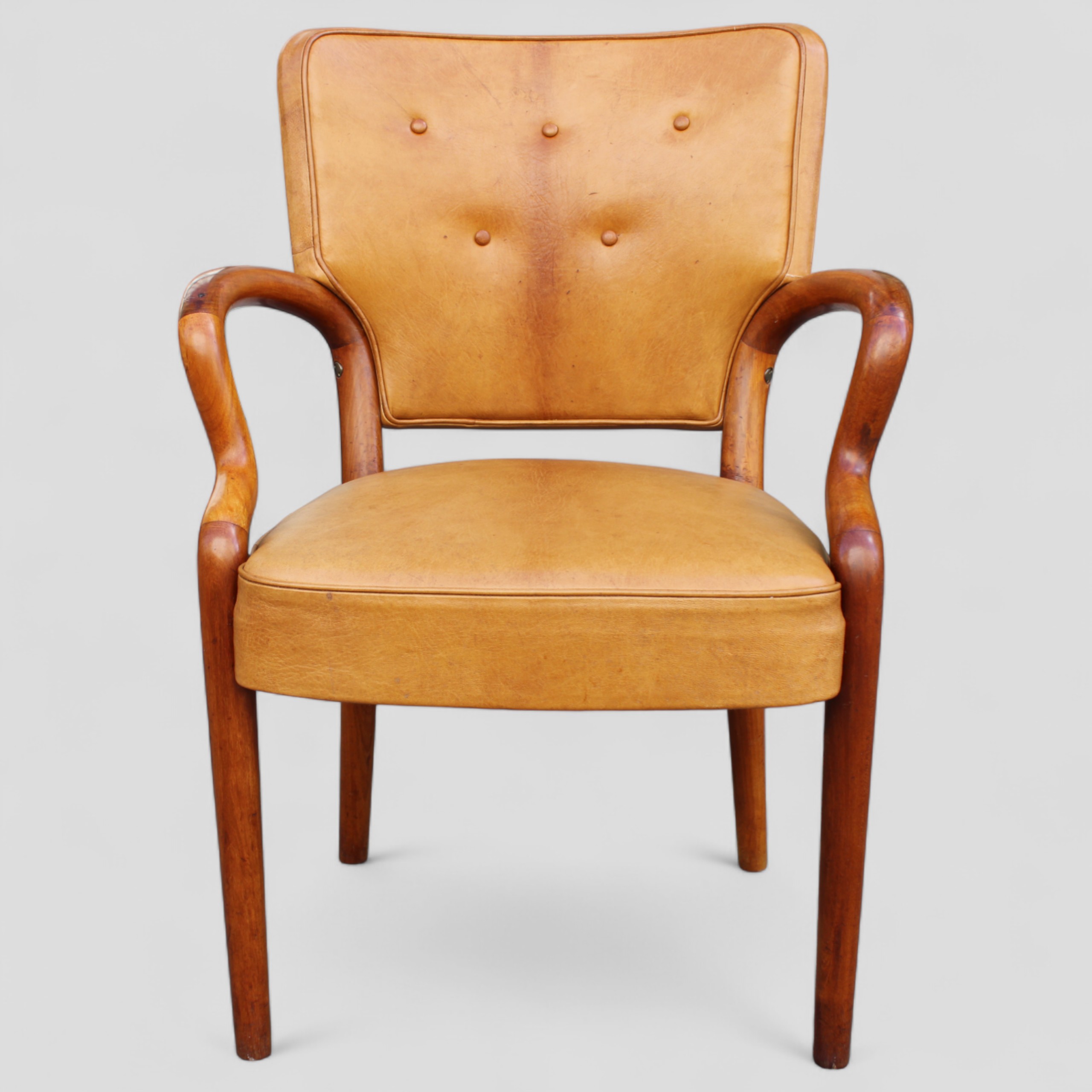
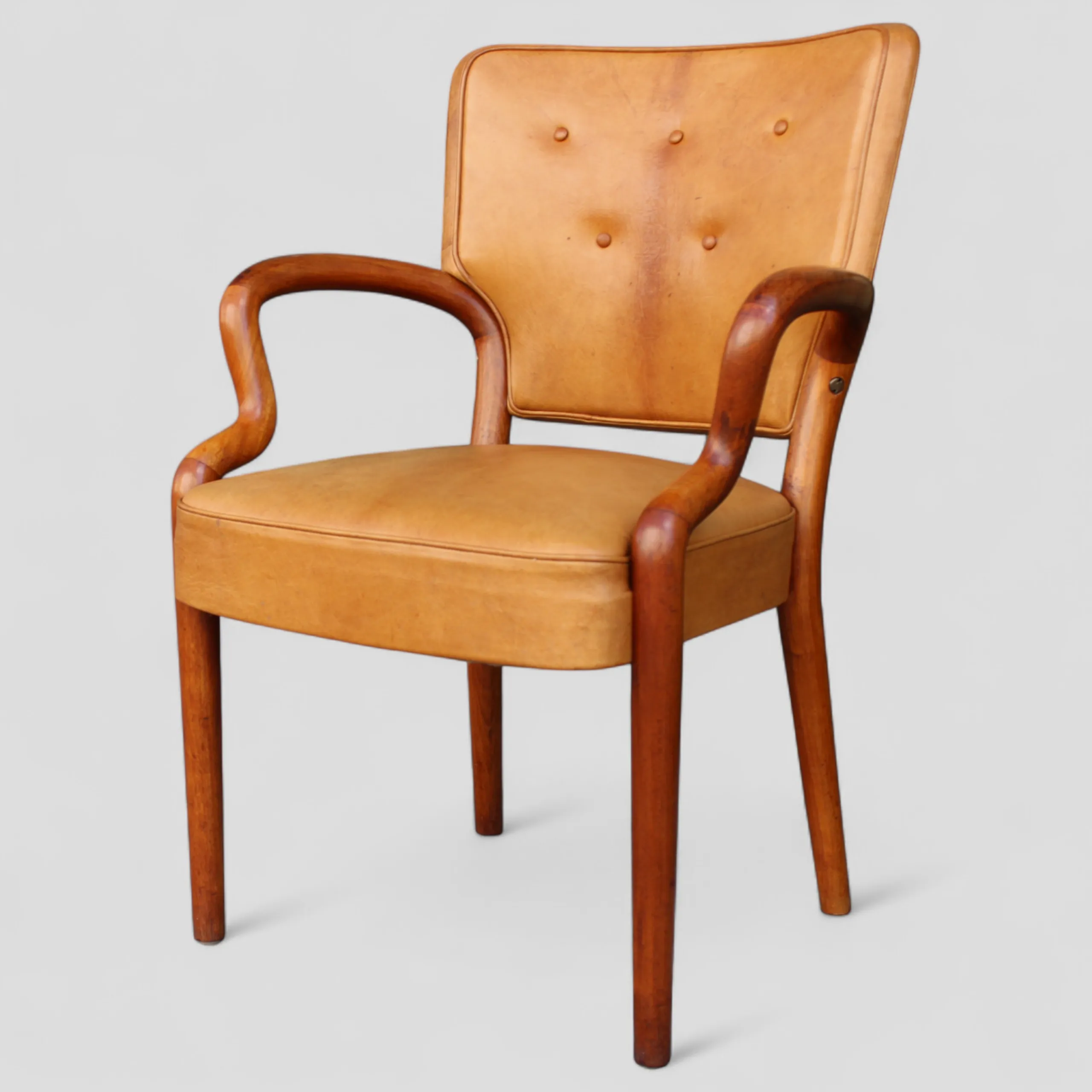
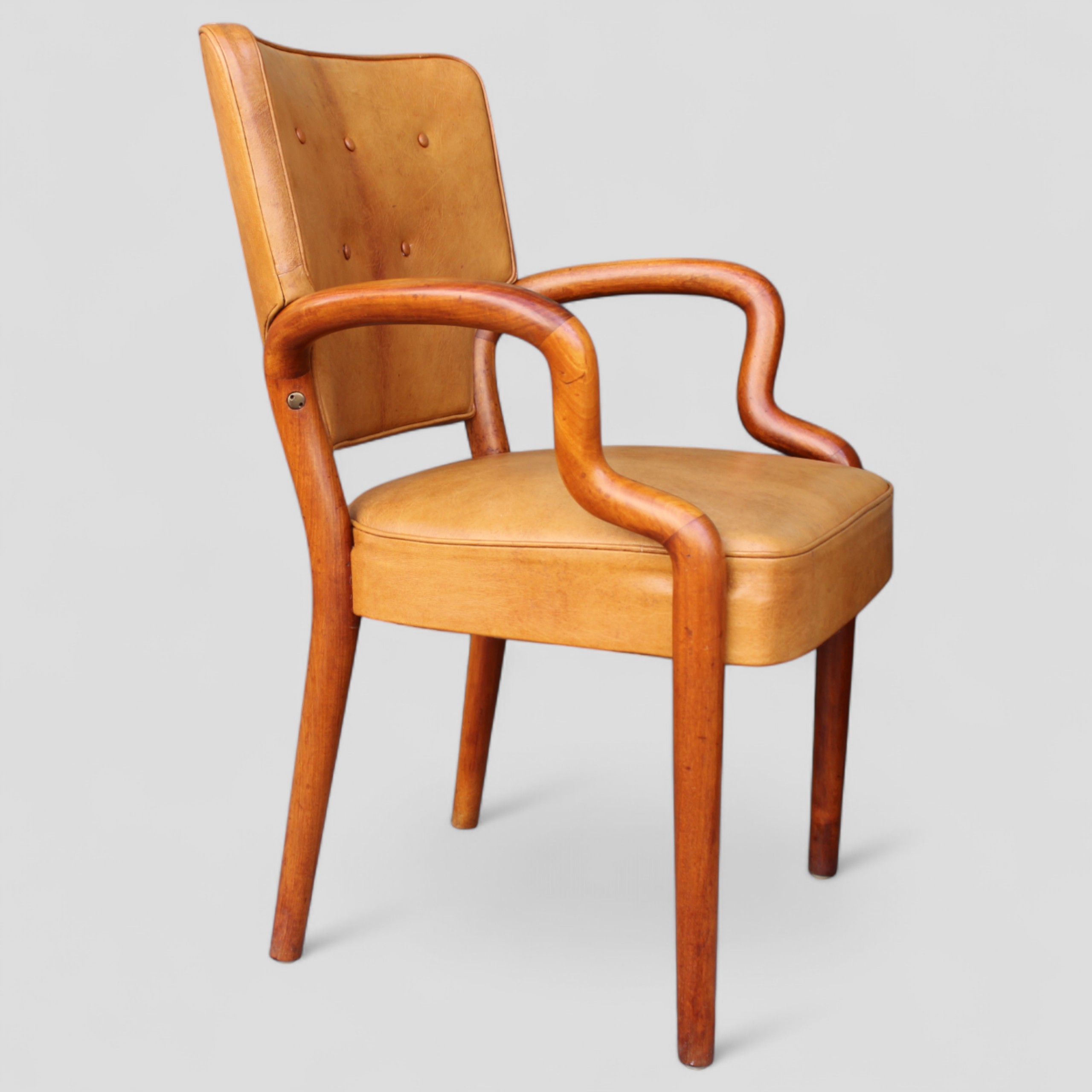
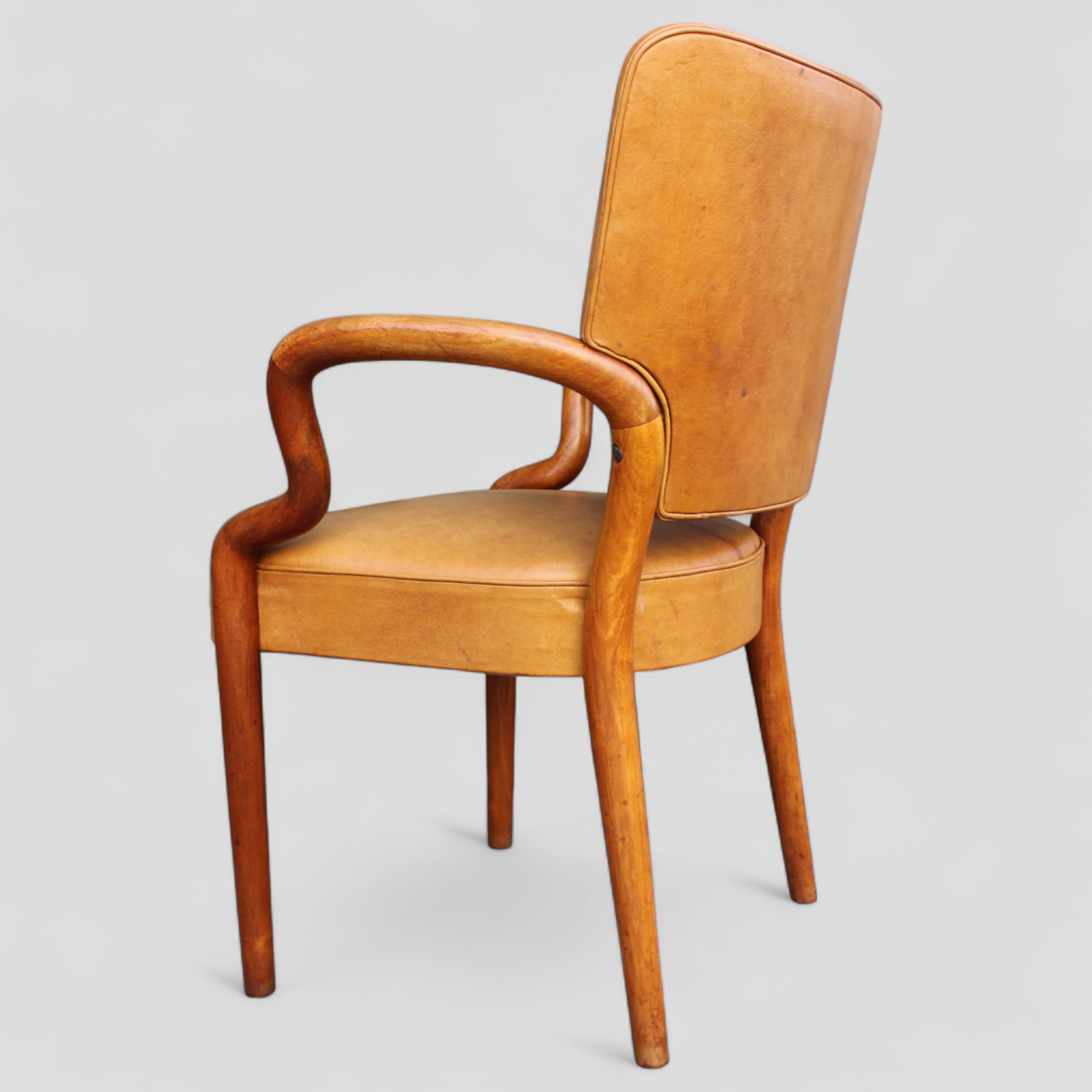
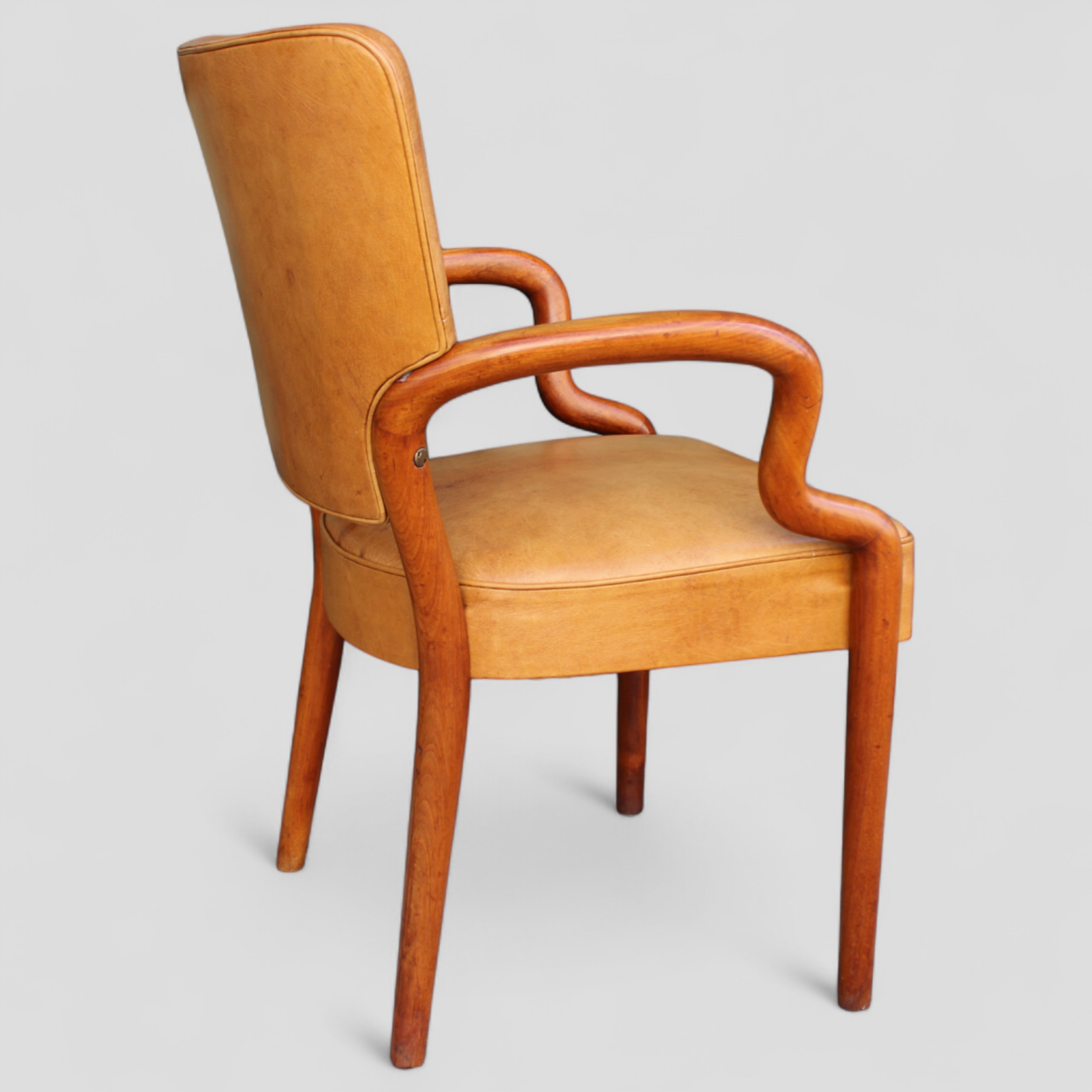
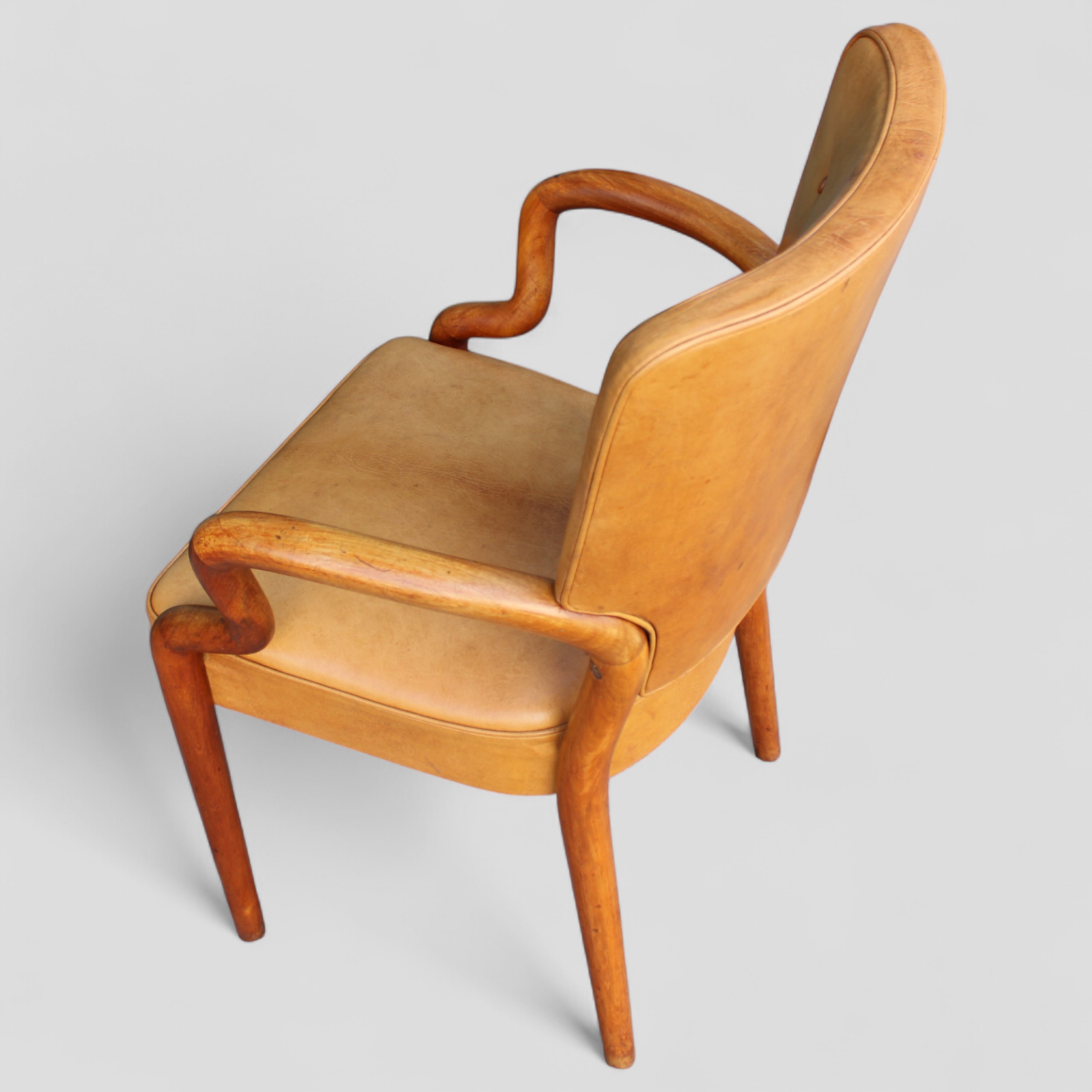
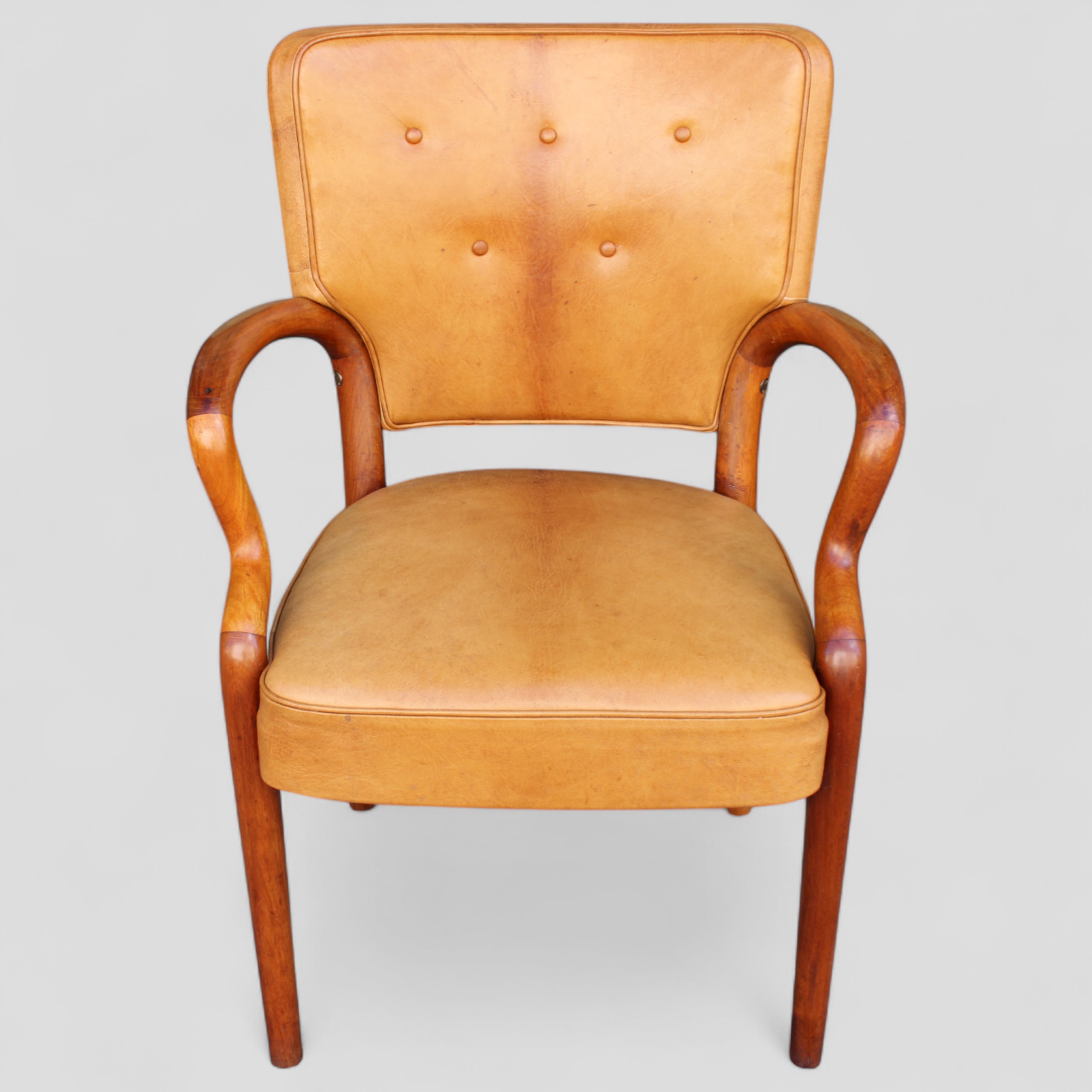
Chair for “The Radio Council” 1940.
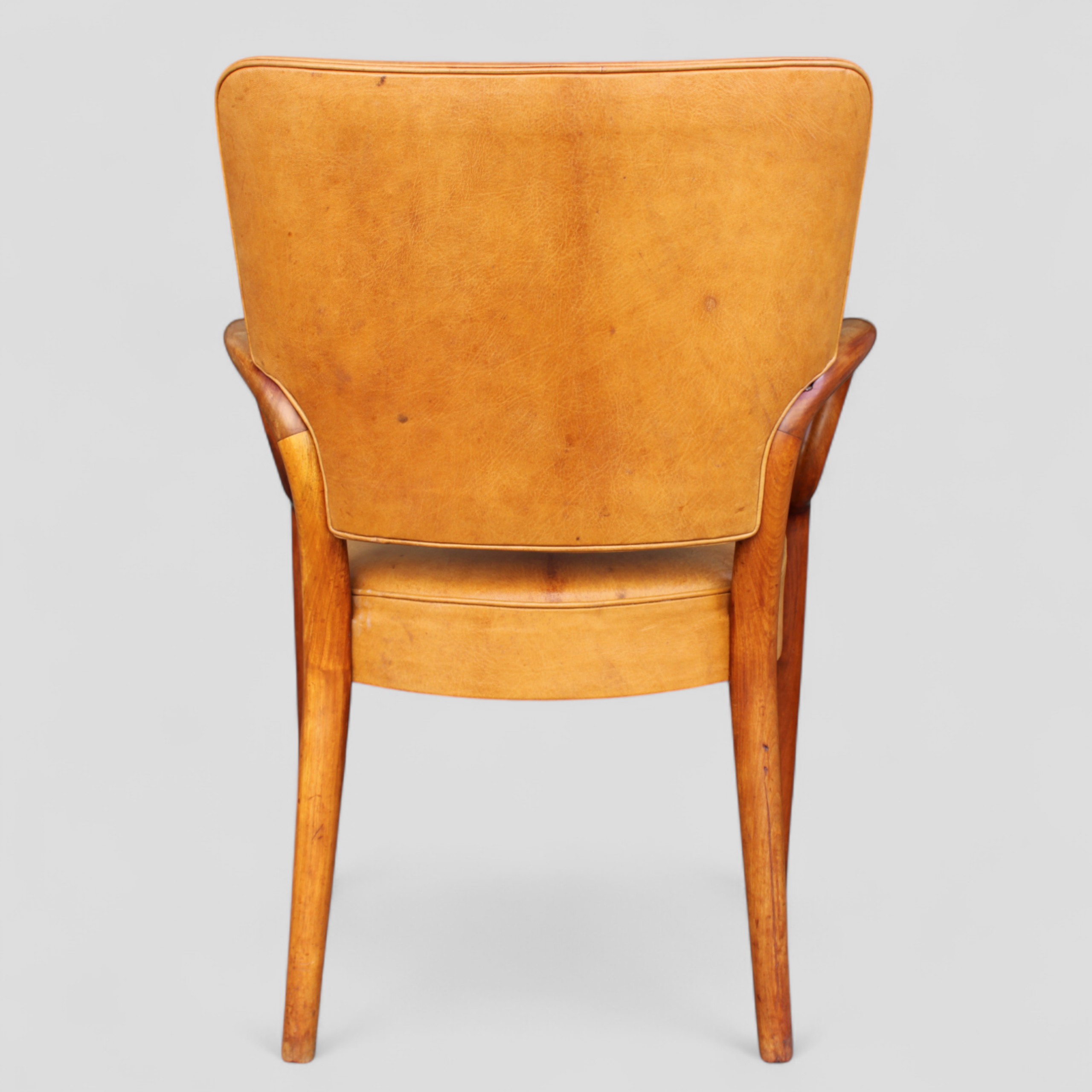
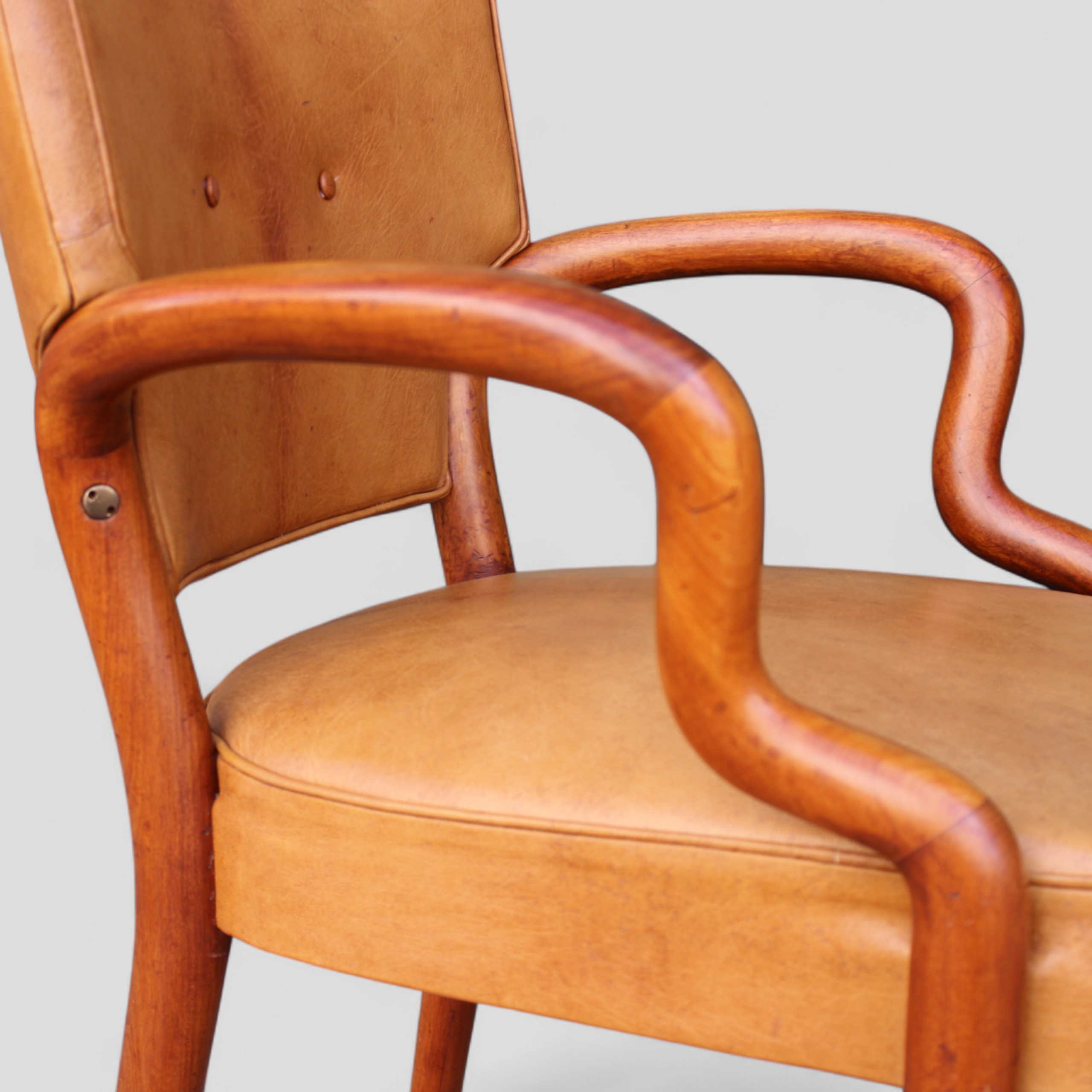
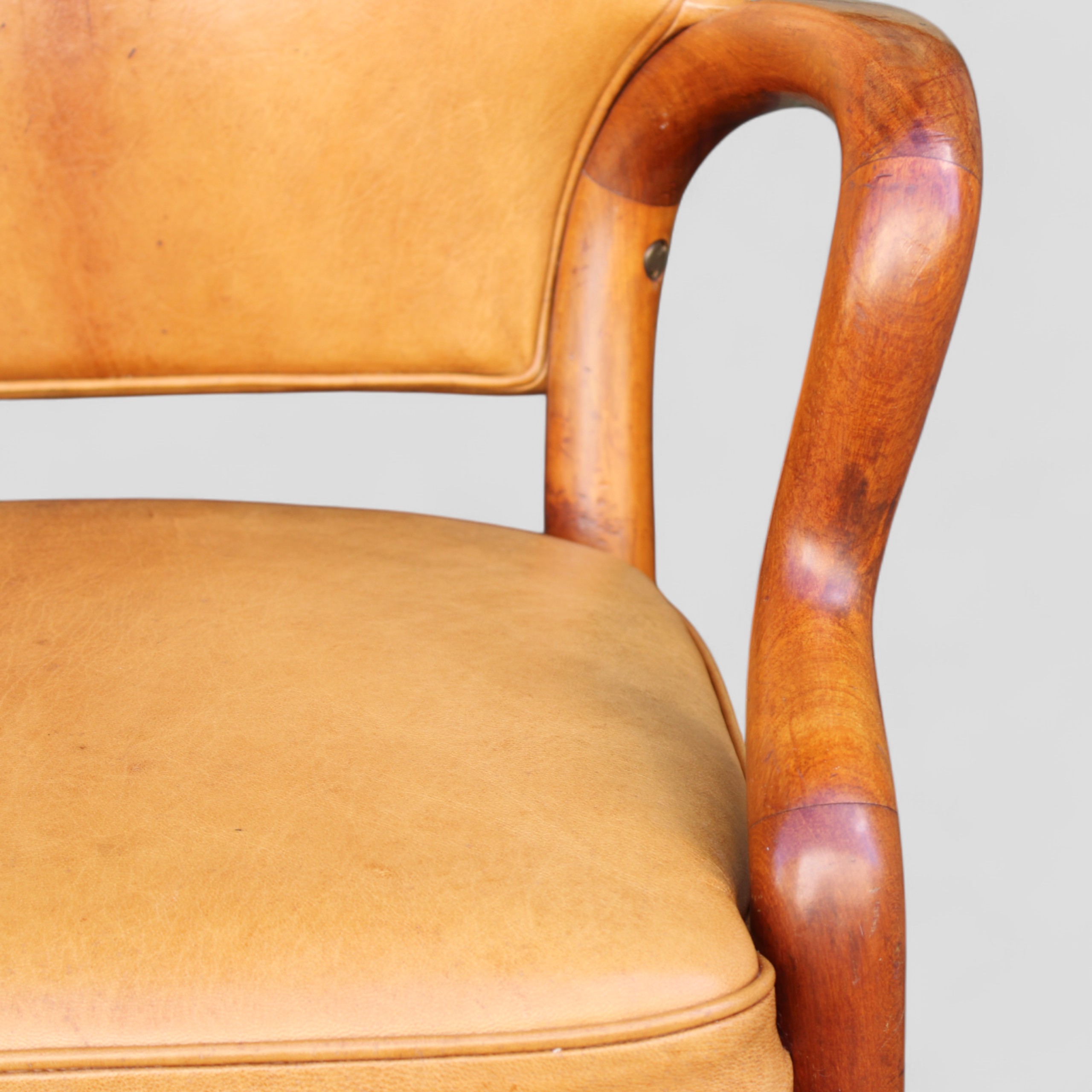
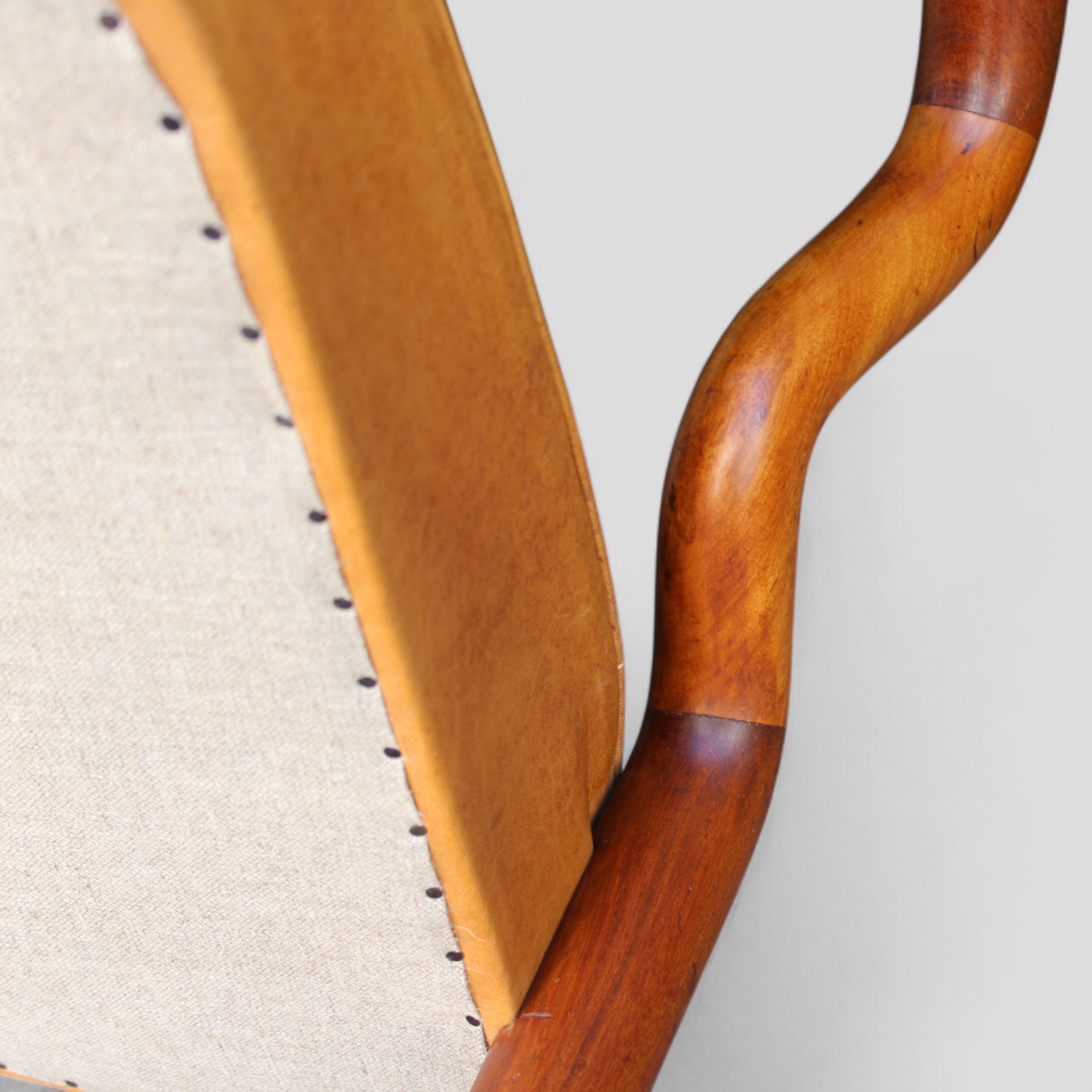
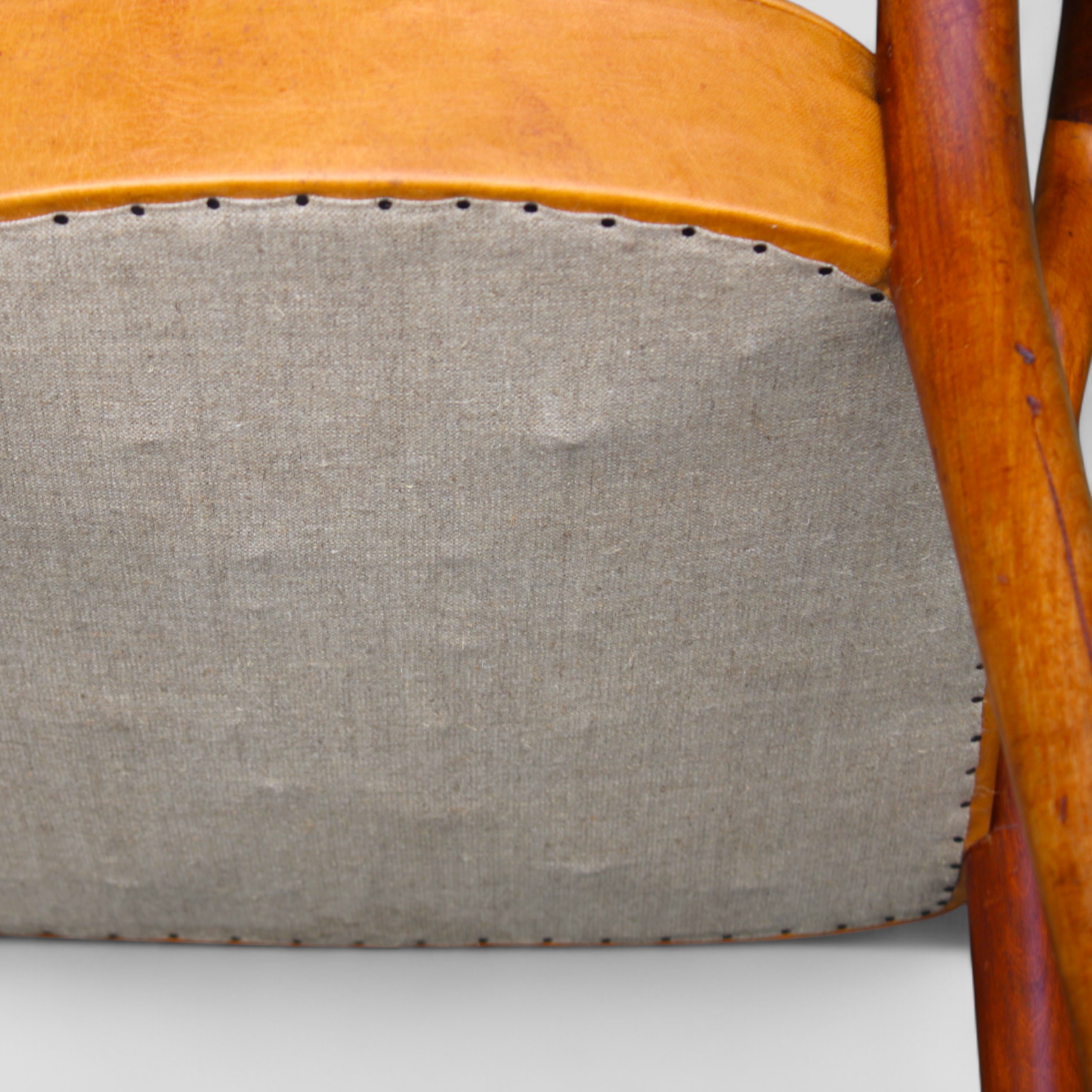
An important chair with frame of Cuban Mahogany. Seat and back upholstered with Niger goatskin. Brass fittings.
Made 1940-1941 by cabinetmaker Normina.
Height 88 cm, width 63,5 cm, depth 63 cm, seat height 46 cm.
Provenance: “Radiohuset” – “The Radio House”. Home to the Danish state broadcaster “Danmarks Radio” from 1945-2005.
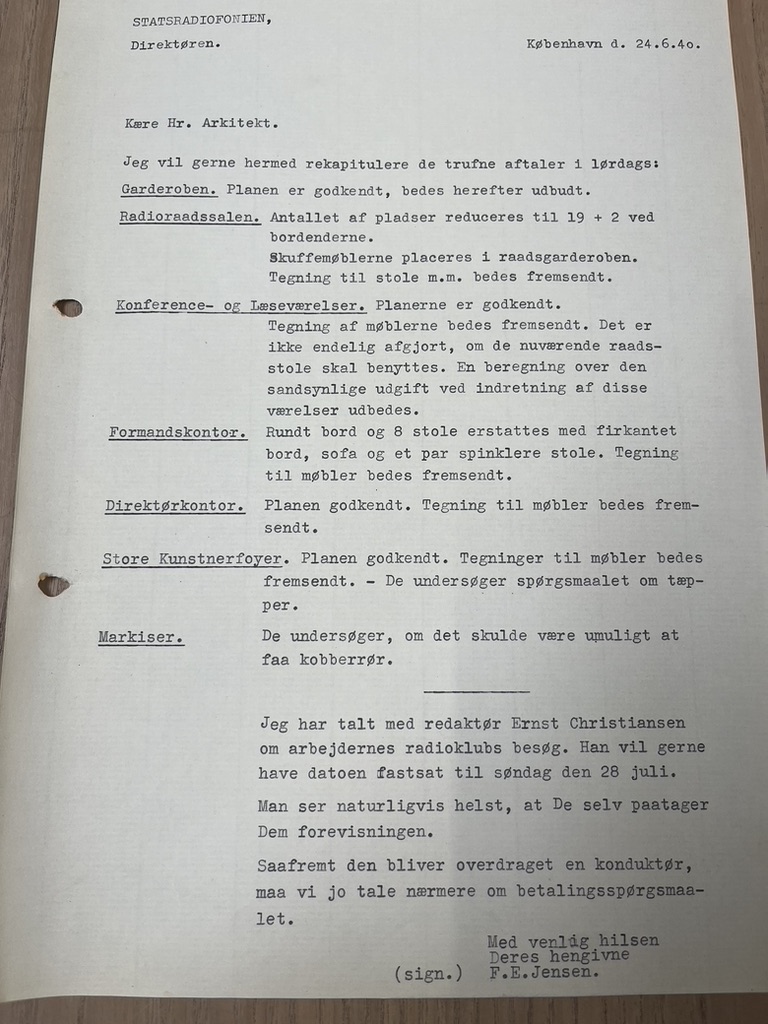
Here used in the hall of “Radiorådet” the politically appointed supreme steering comitee or board of the National Broadcaster.
The chair is a highly important design for a number of reasons.
“The Radio House” is in itself the masterpiece of the architect Vilhelm Lauritzen, and as such an internationally important example of a softer organic modernism typical to Denmark.
It was also a showcase for modernity in a broader sense and intended to display the best of this, as it was perceived around the 1940s.
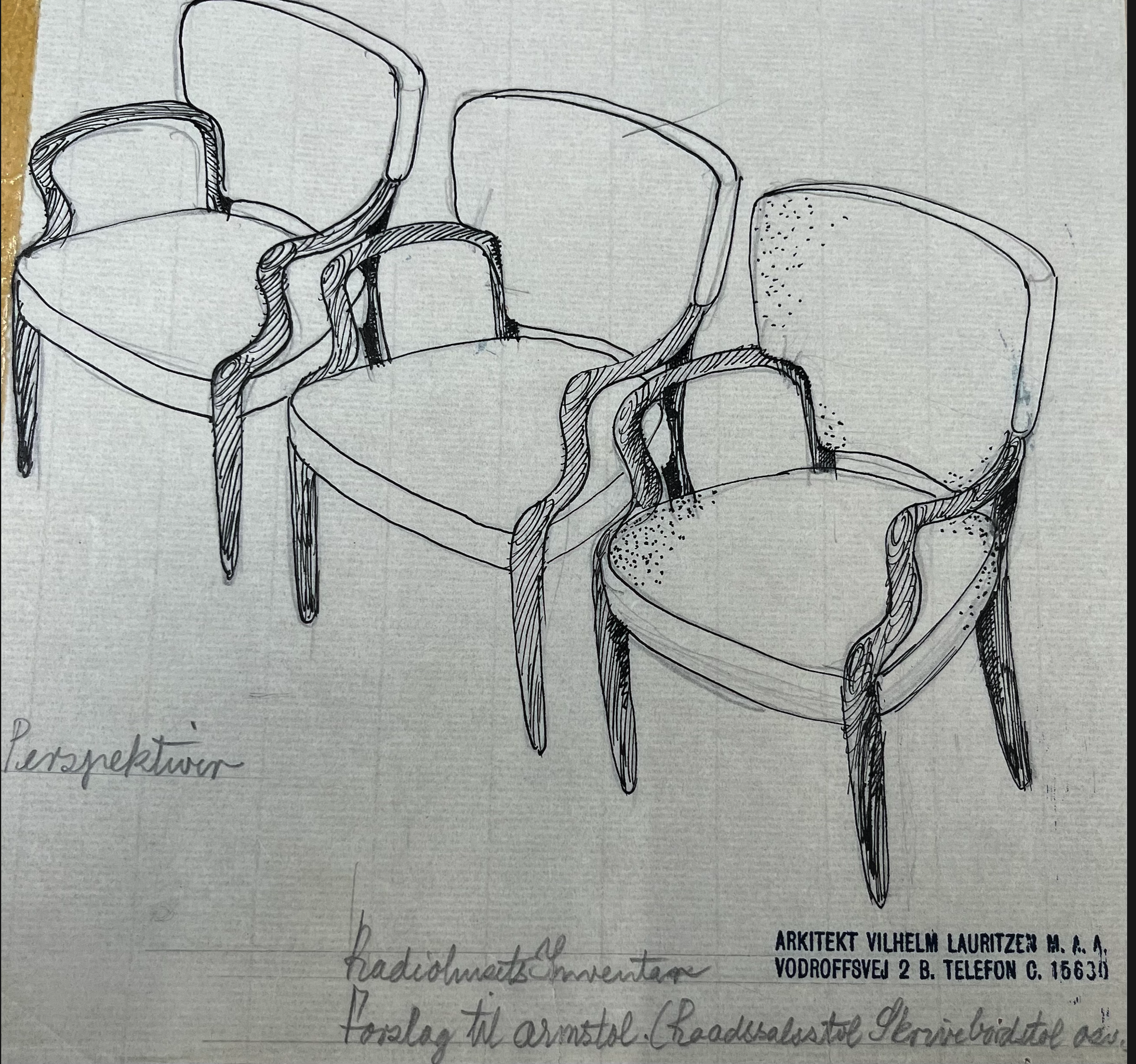
More specifically for the importance of this chair it is crucial to understand that from 1934 -45 Vilhelm Lauritzen hired the young Finn Juhl to specifically work on and design the interiors of several projects, of which the “Radio House” was the cornerstone in that period.
There is discussion of how much of the interiors by Vilhelm Lauritzen that should be assigned to Finn Juhl.
Finn Juhl himself was clear. Pieces he worked on while employed by Vilhelm Lauritzen were by Vilhelm Lauritzen, period.
Formally there was and is no ambiguity.
But it is today evident, that Finn Juhl would never have become the brilliant designer of furniture, if he had not been given the opportunity to work on such great projects early on, and with such a great mentor as Vilhelm Lauritzen.
Equally evident is it, that the exceptional organic interiors found in Vilhem Lauritzens work in the late 1930s and early 1940s, would not have been the same without Finn Juhl.
It is also in the context of Finn Juhls later armchairs clear where his starting point was.
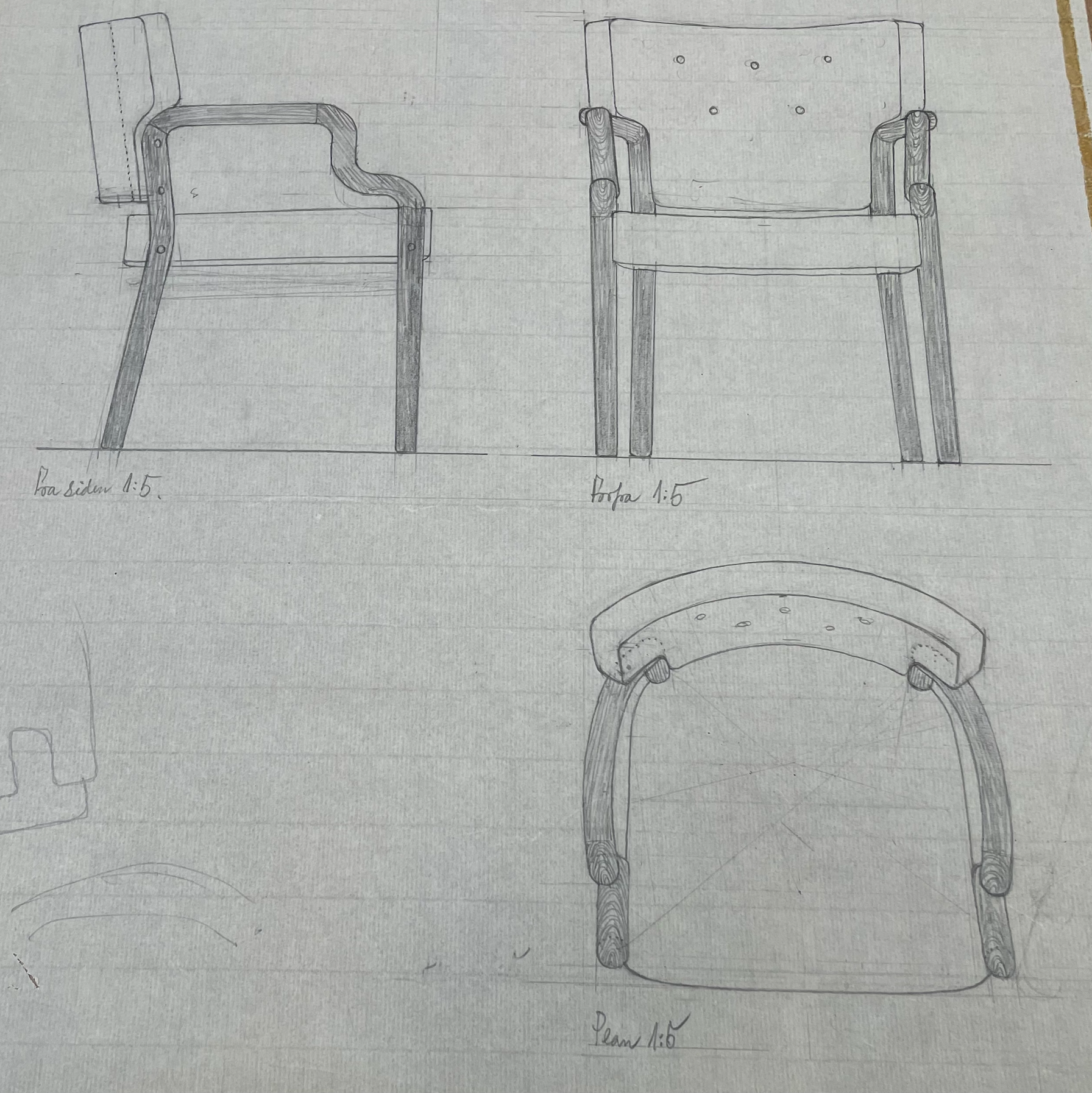
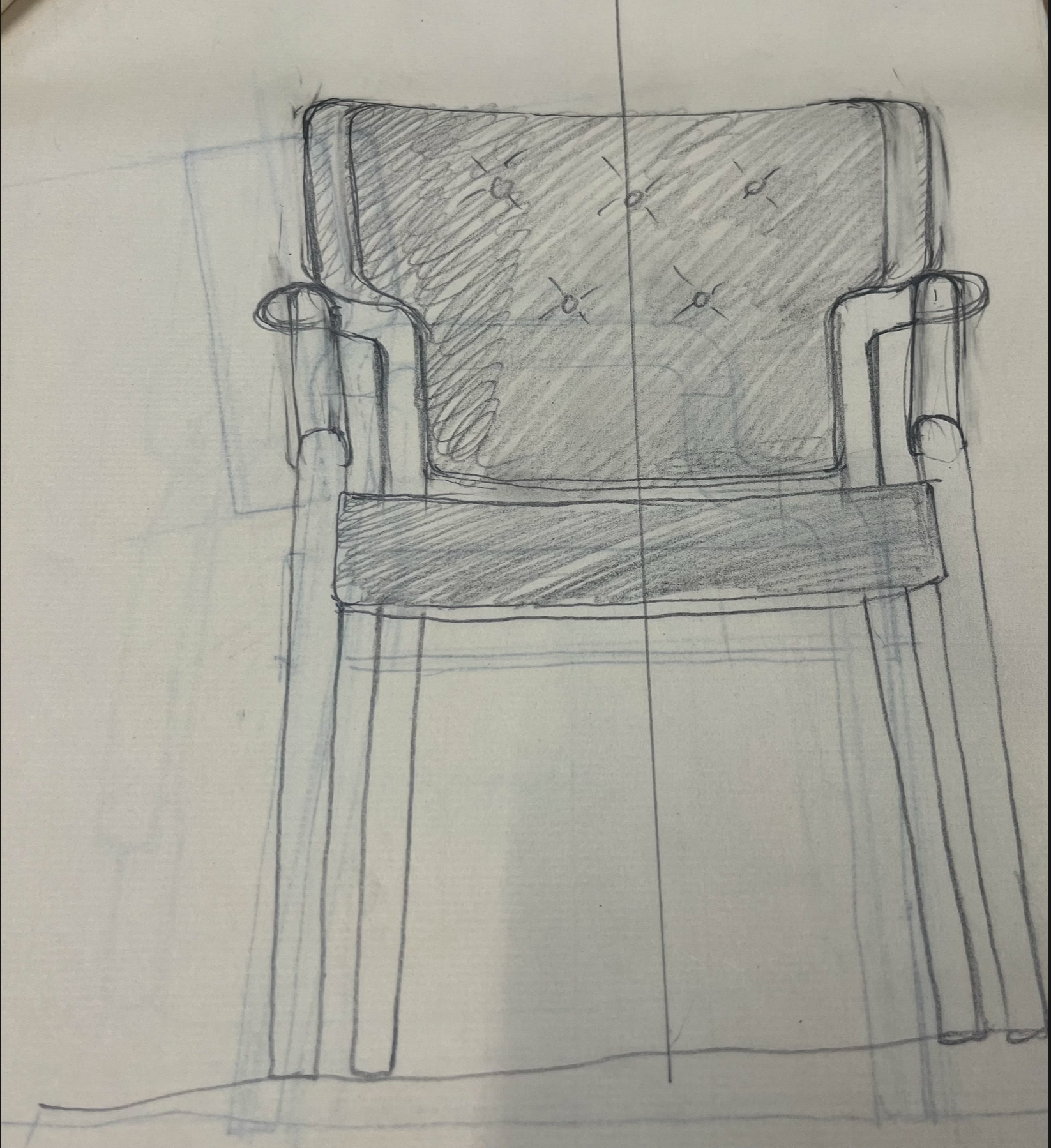
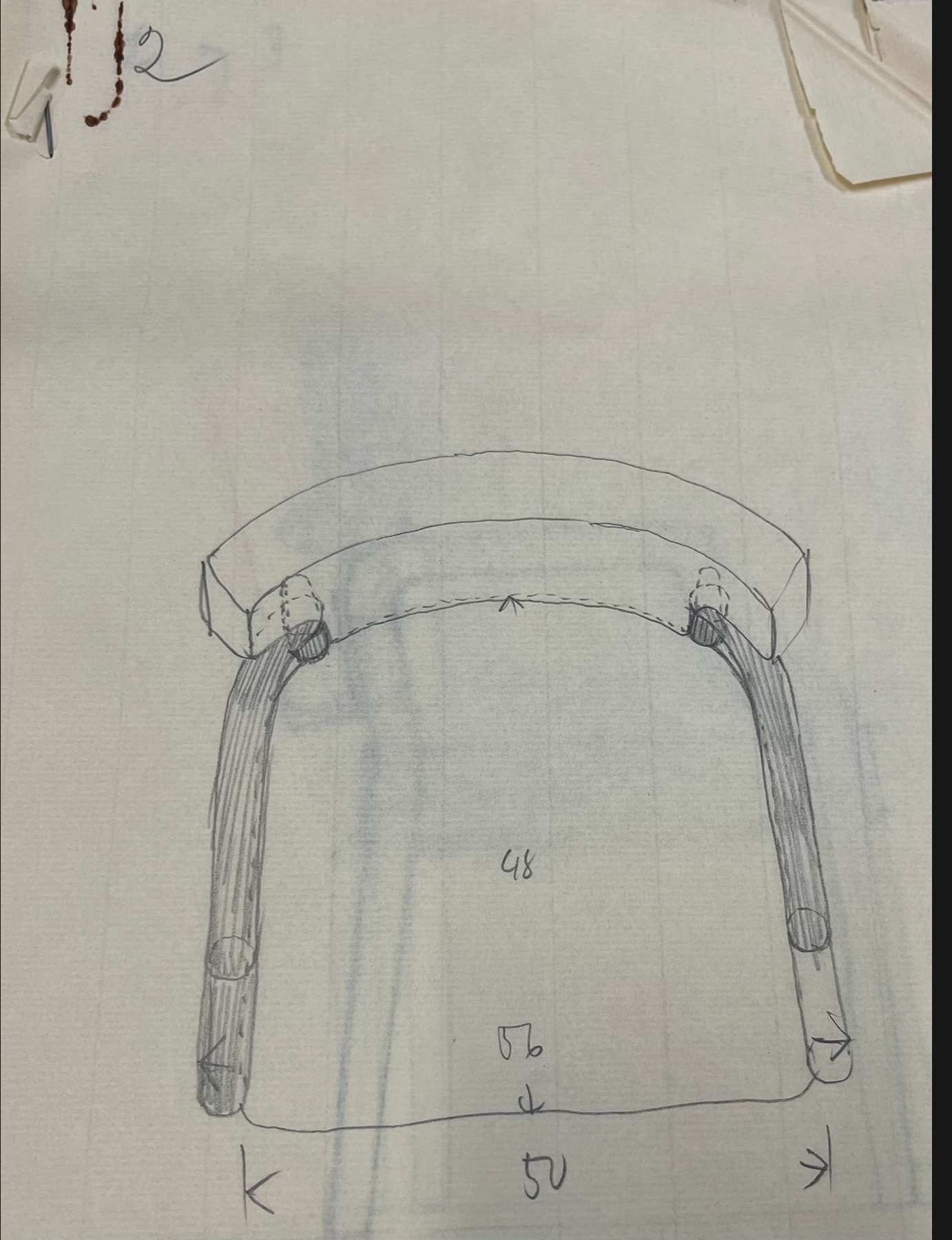
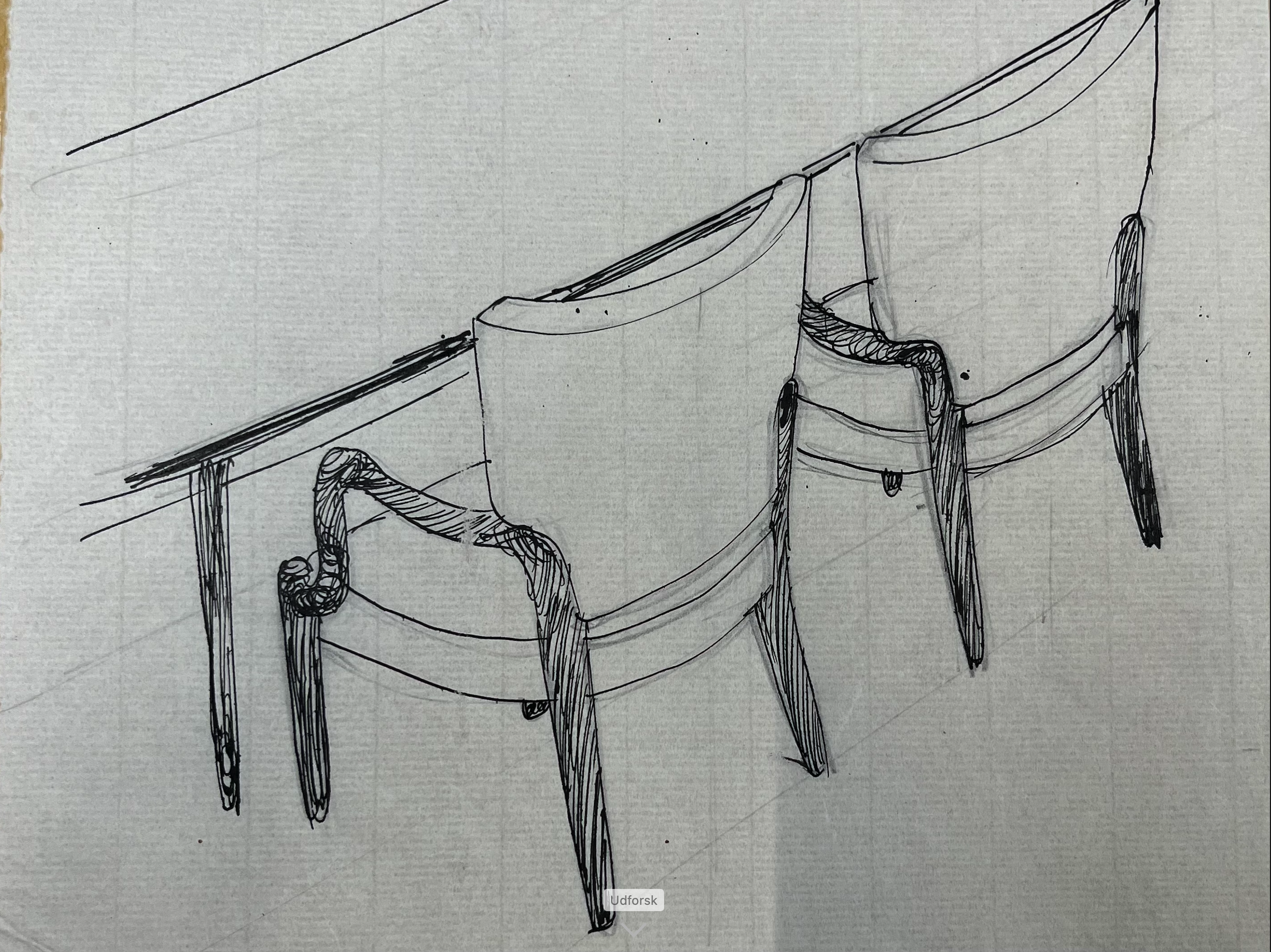
This chair where Finn Juhl was the one who put the pen to paper in its design, can be seen as the first in a type of organic armchairs, that culminates with Finn Juhl’s FJ-46 chair in 1946.
The chair is characterized by a clear separation of legs from seat and back. A first attempt to separate the carried from the carrying. A principle that Juhl would return to again and again later on. The positioning of legs and armrest would also be repeated in almost identical way in later chairs by Finn Juhl.
The design of this chair is something that points forward in time when it was made in 1940, and yet the solid sturdy nature of legs and armrests are typical of this period.
It is a chair with a clear organic presence, but without any tendencies to luxury or exaggeration.
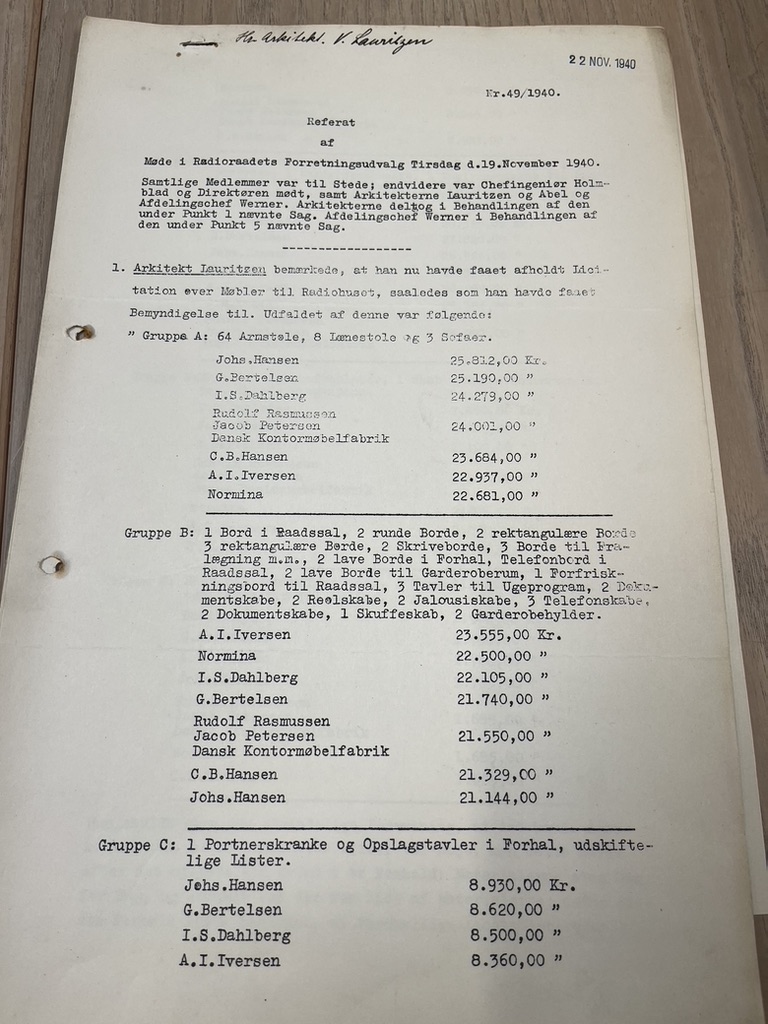
The chair was made by Normina during the winter 1940-41. The order awarded to them after a public procurement process, where their offer, for a section of the interiors in the “Radio House”, was the best.
21 chairs were made for the “Radio Council” and estimated 6 for executive offices in the “Radio House” .
Today none remain at the “Radio House”.