


Finn Juhl – a very early FJ-41 wall unit
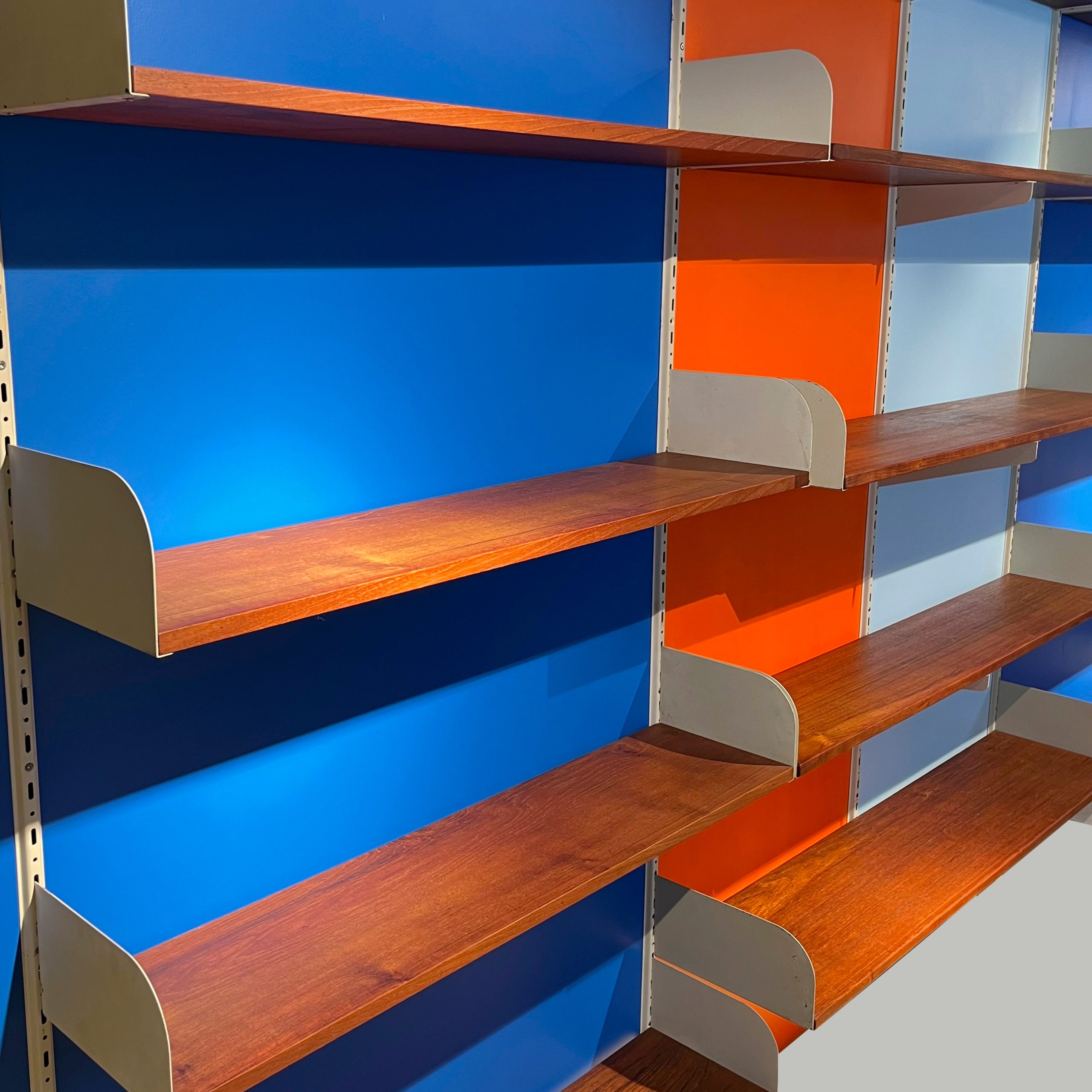
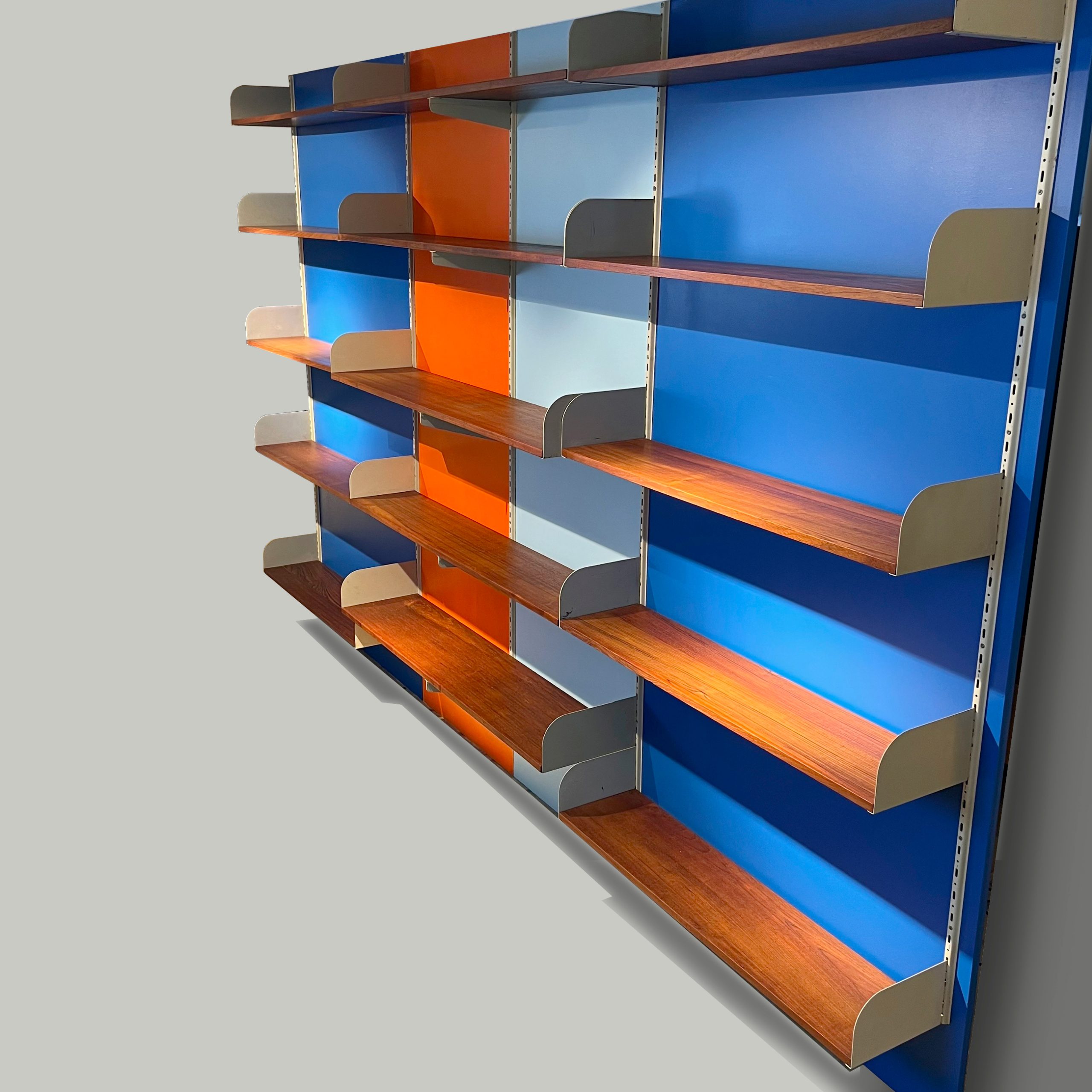
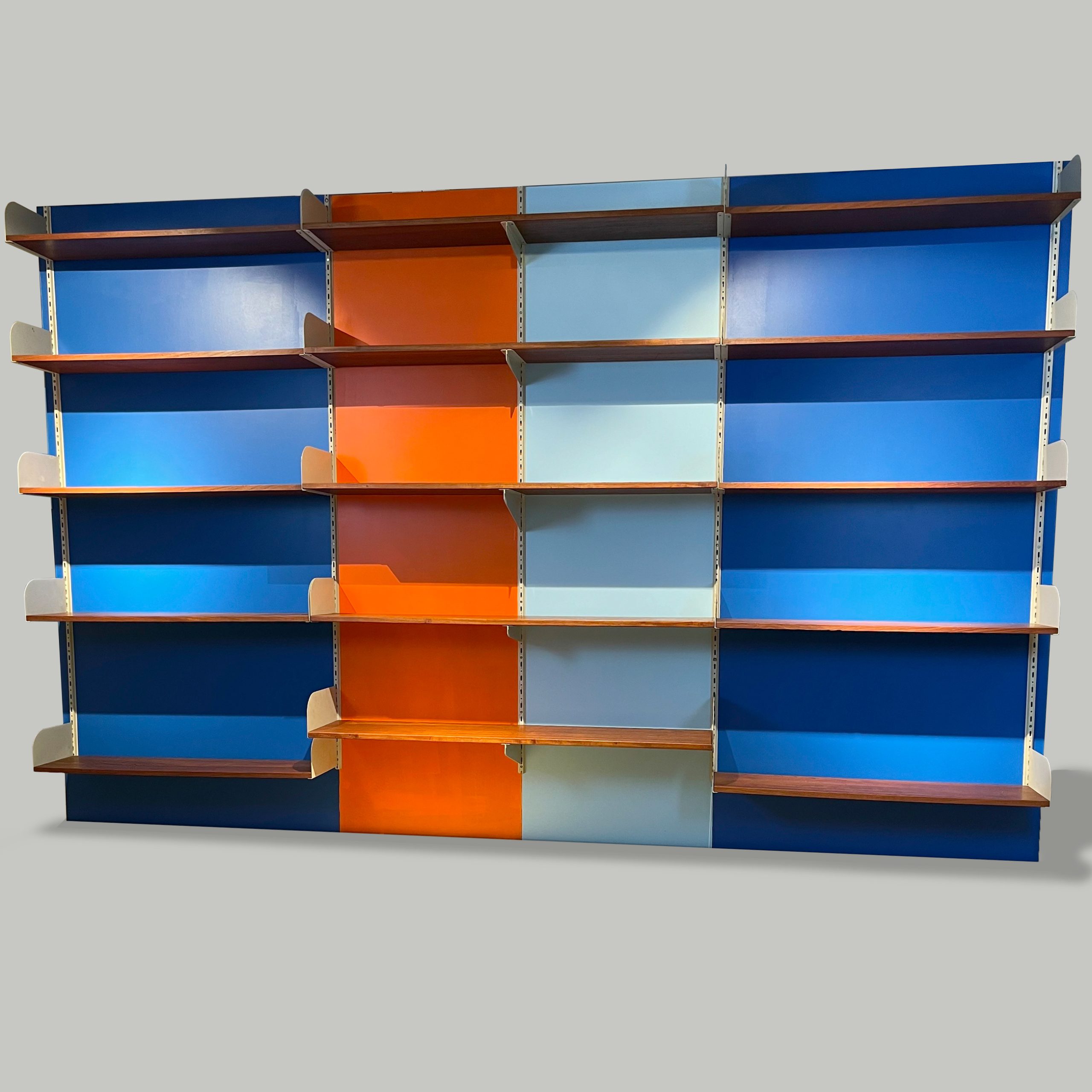
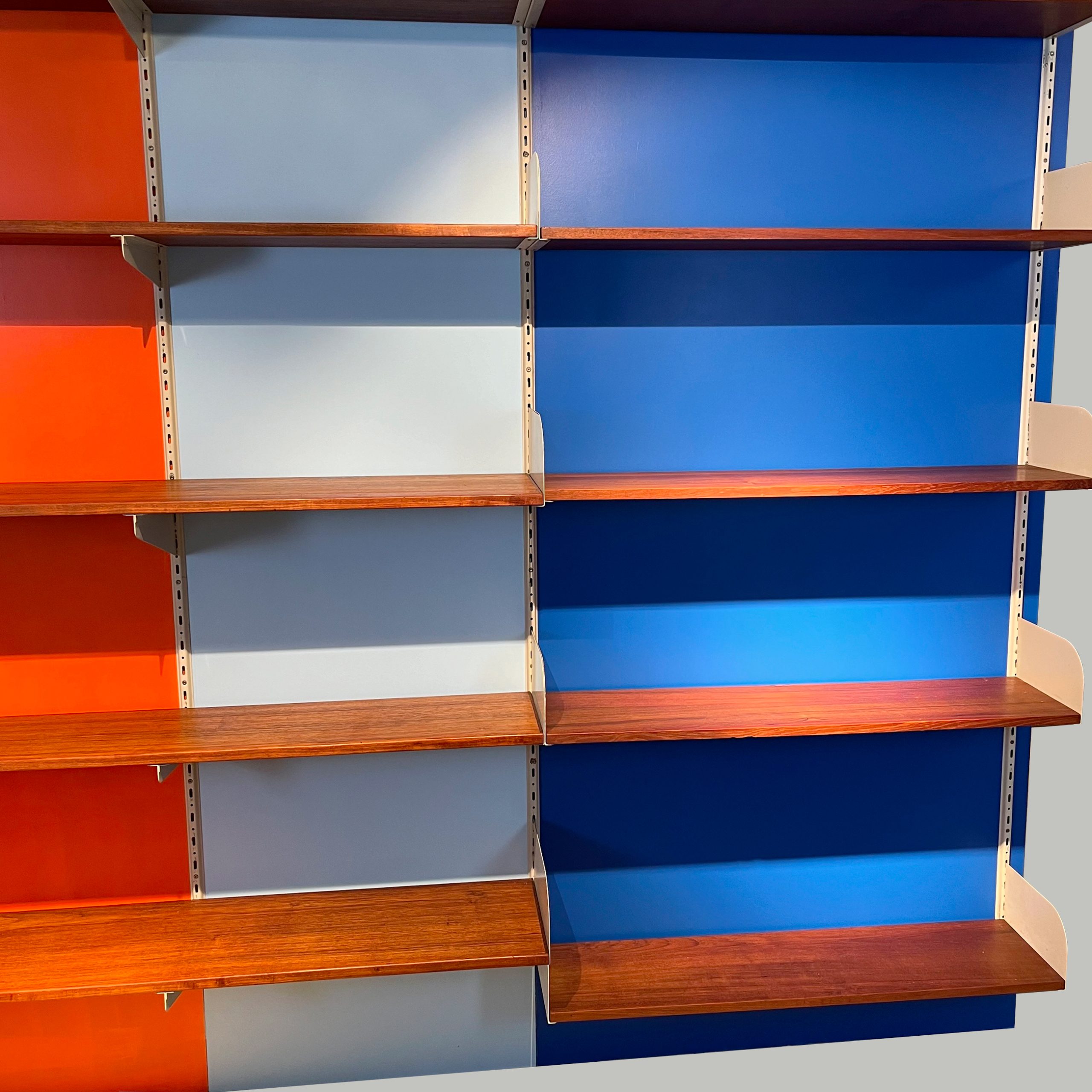
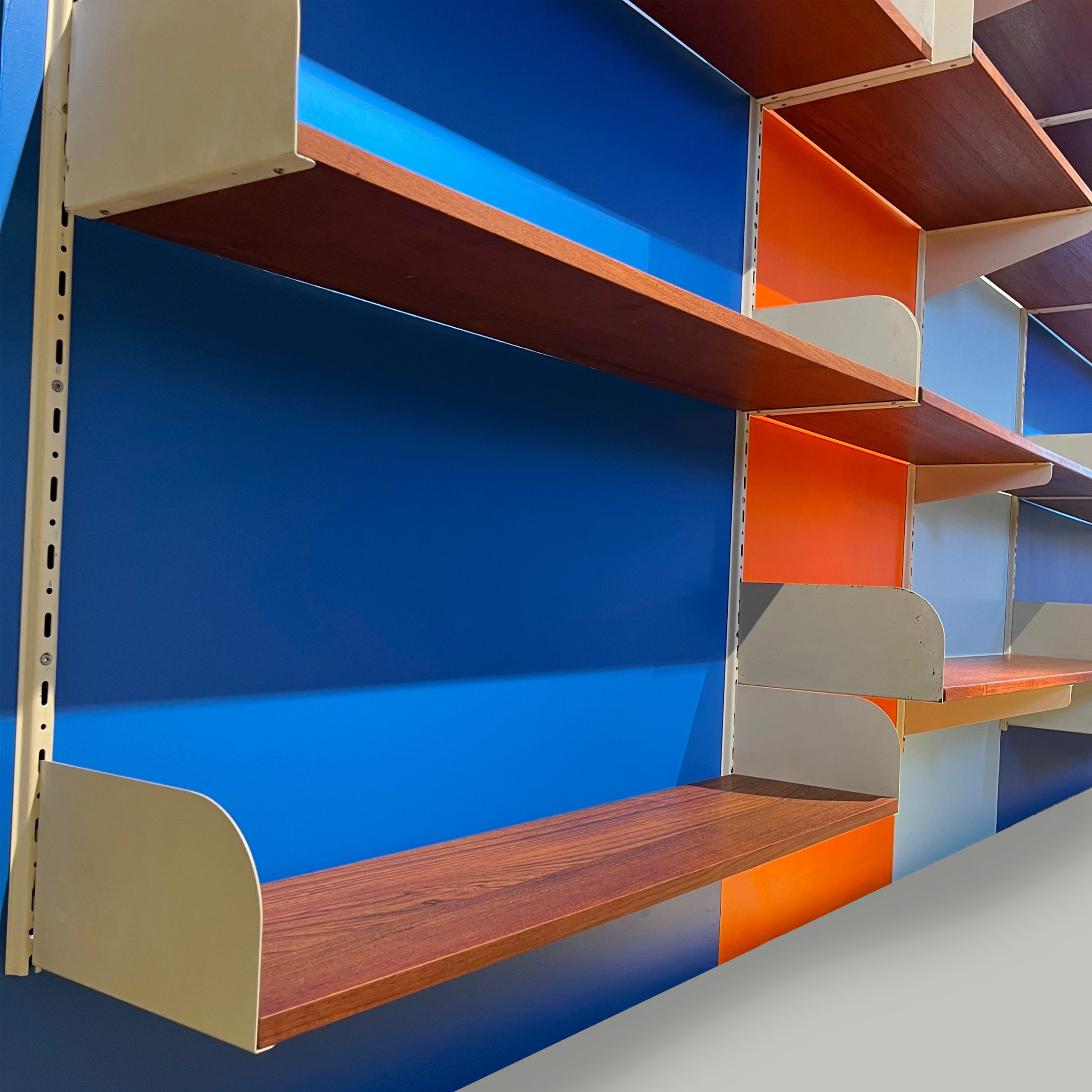
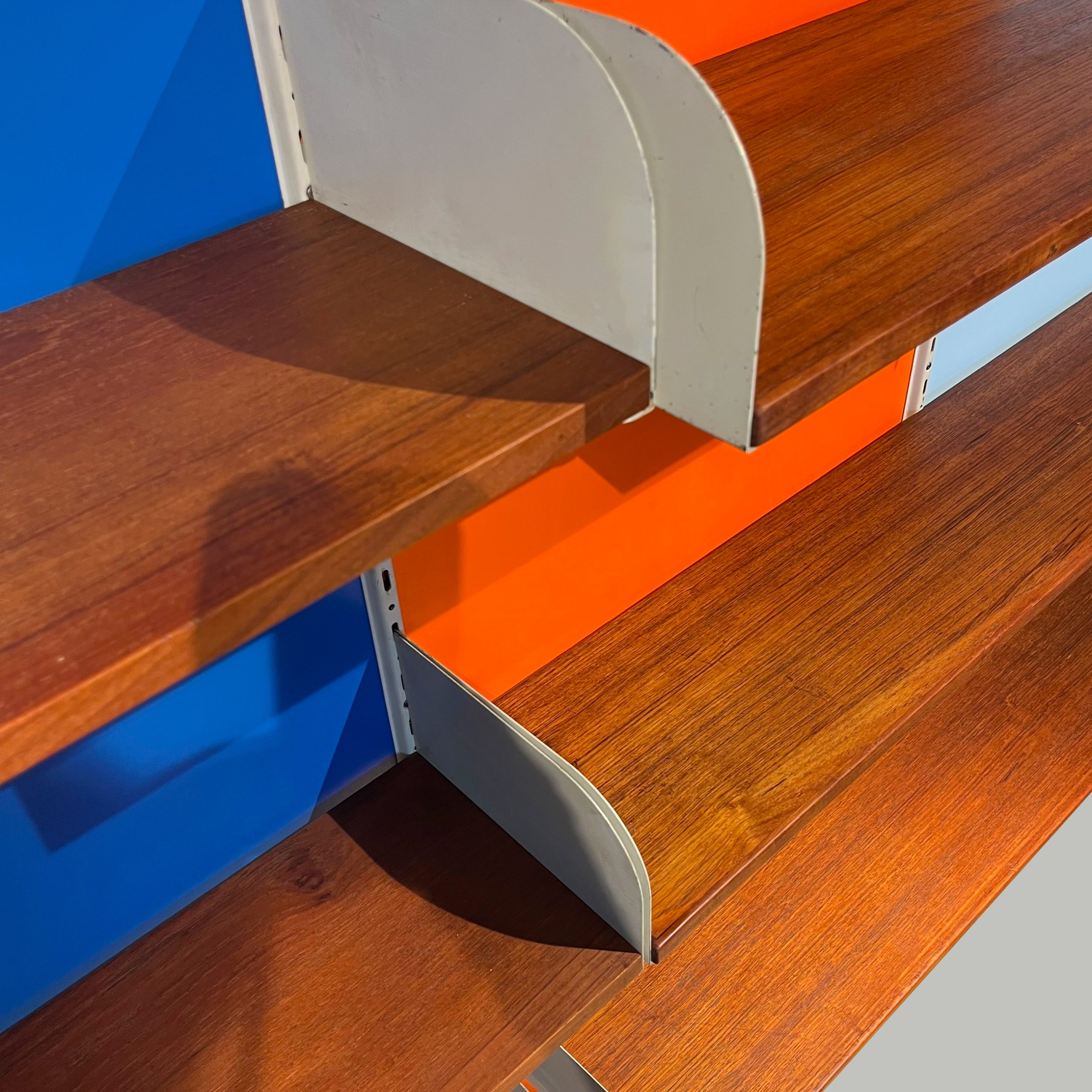
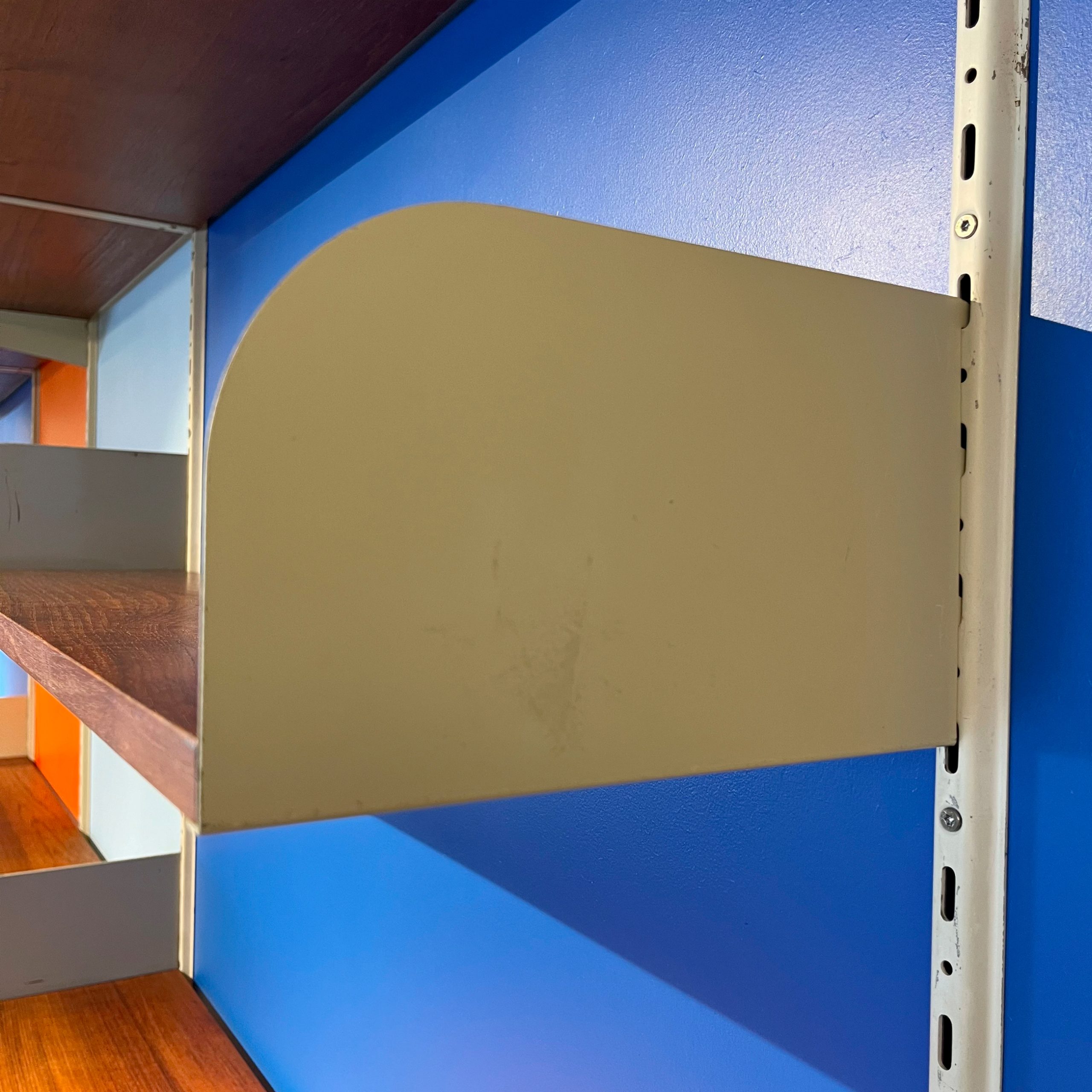
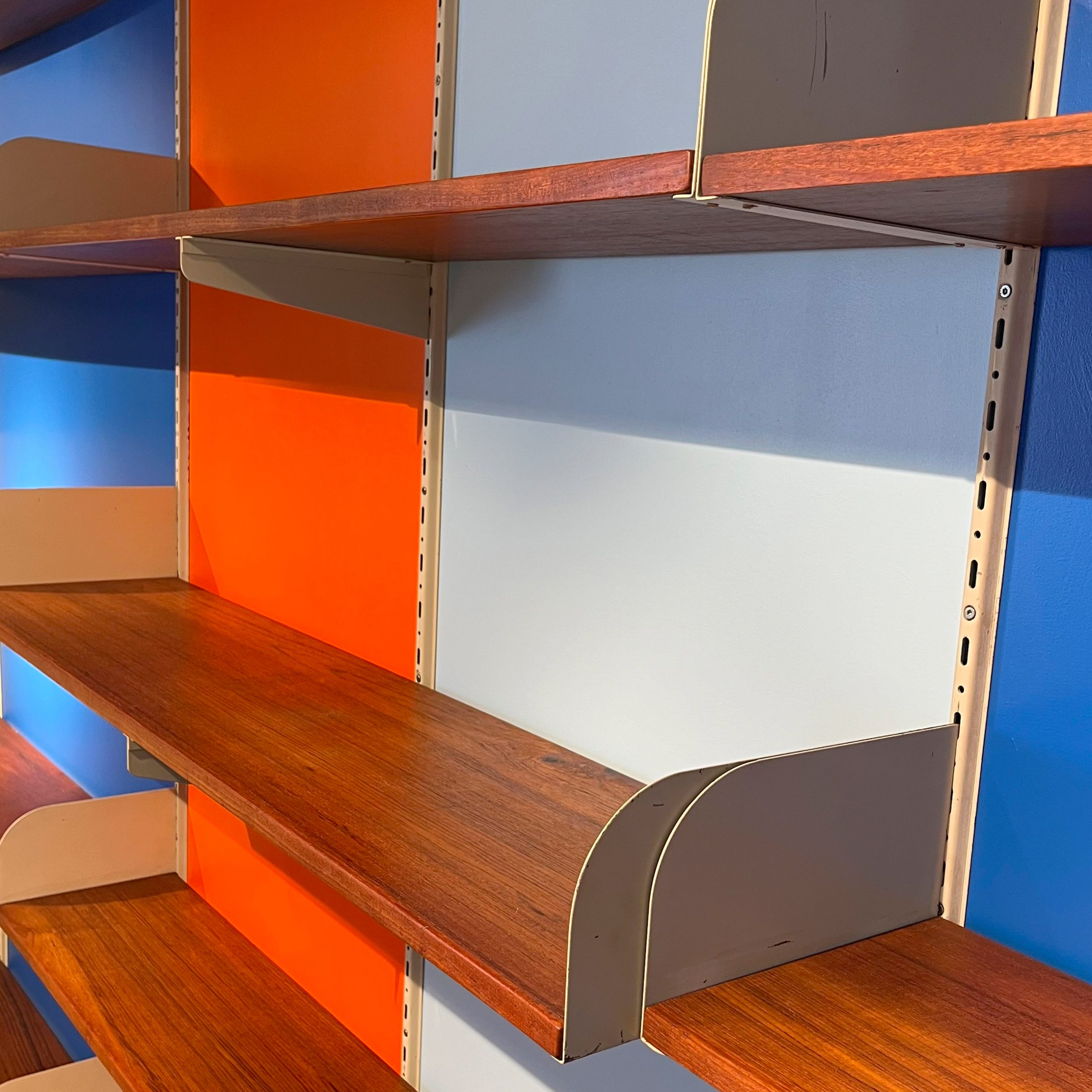
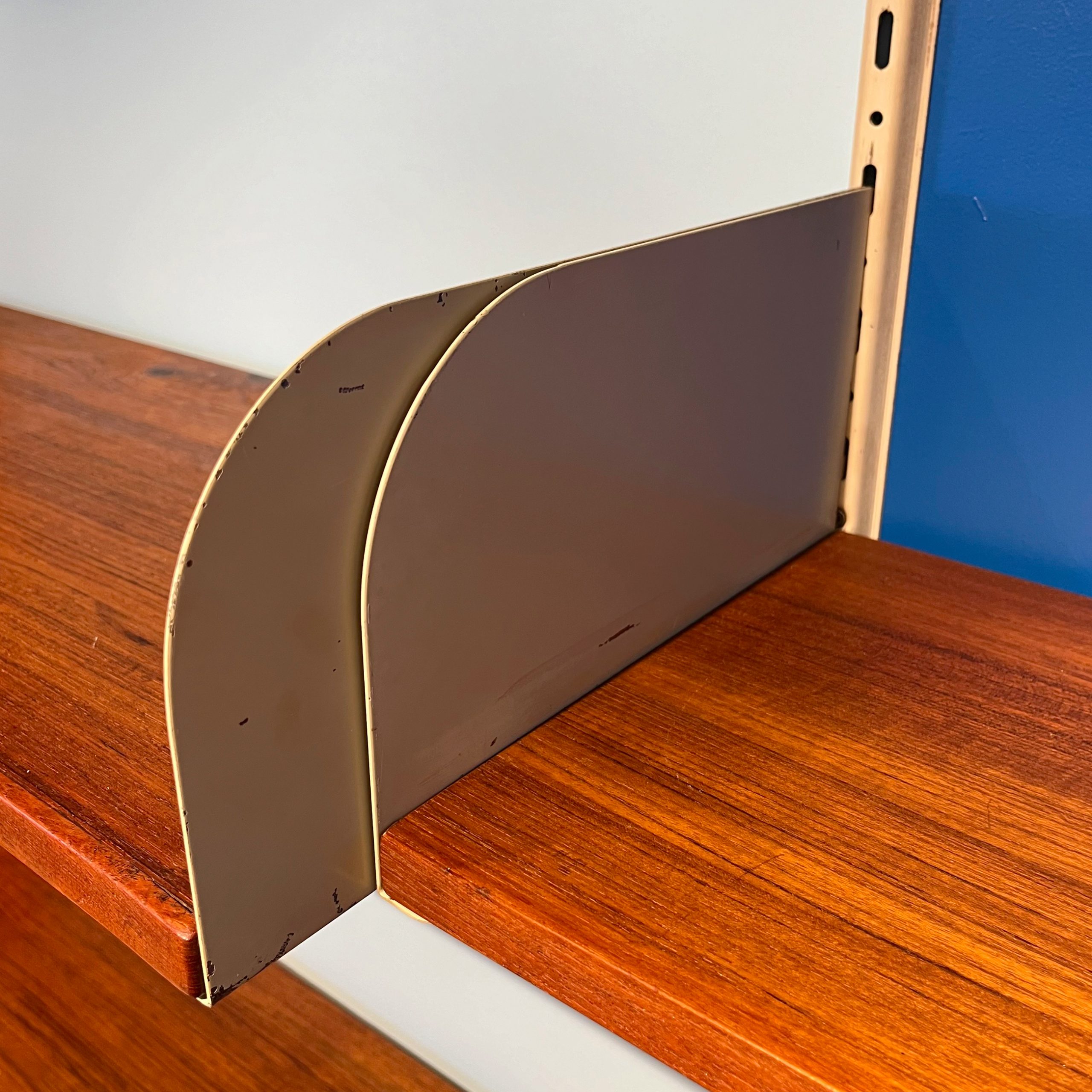
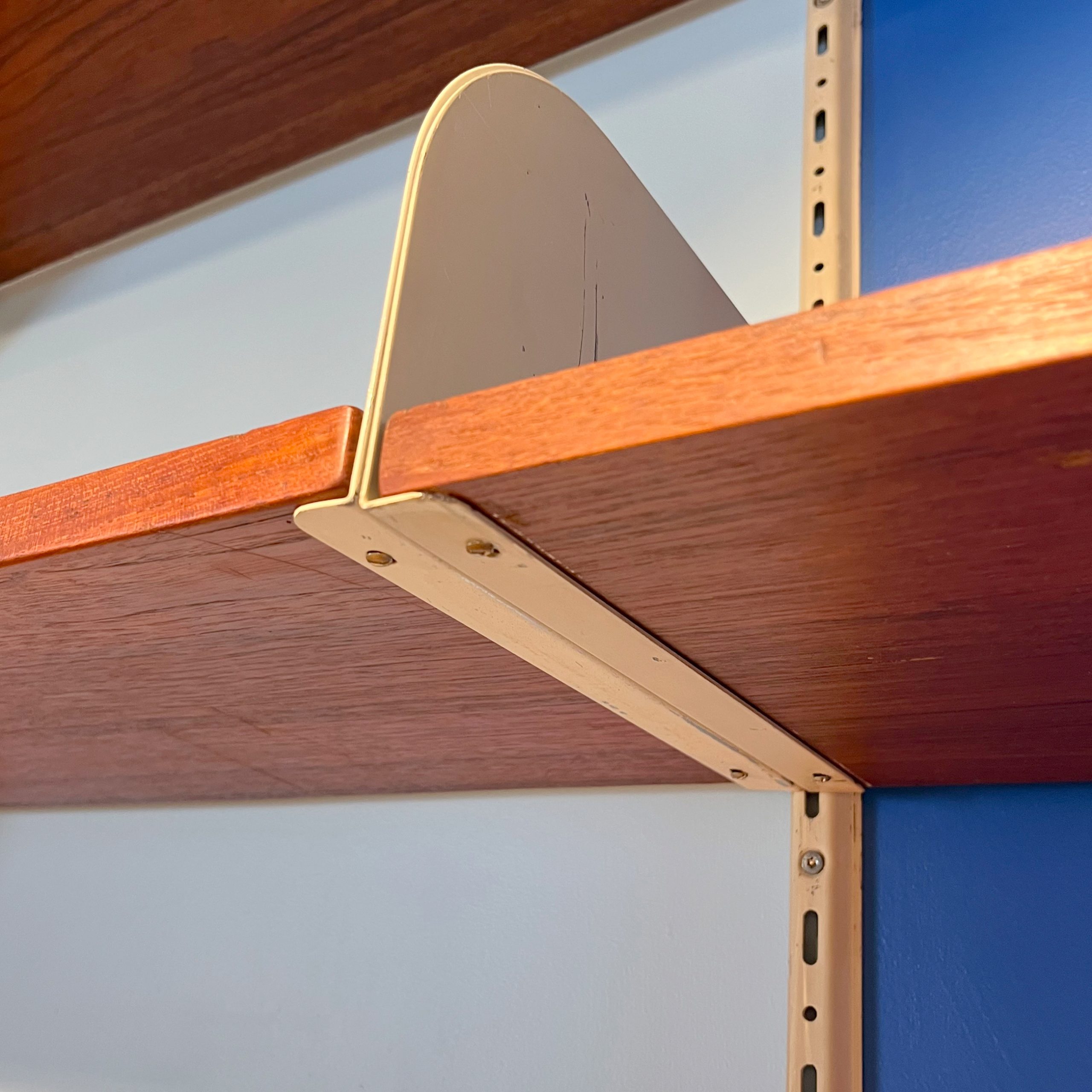
15 teak shelves with white painted metal holders and 5 rails for wall mounting.
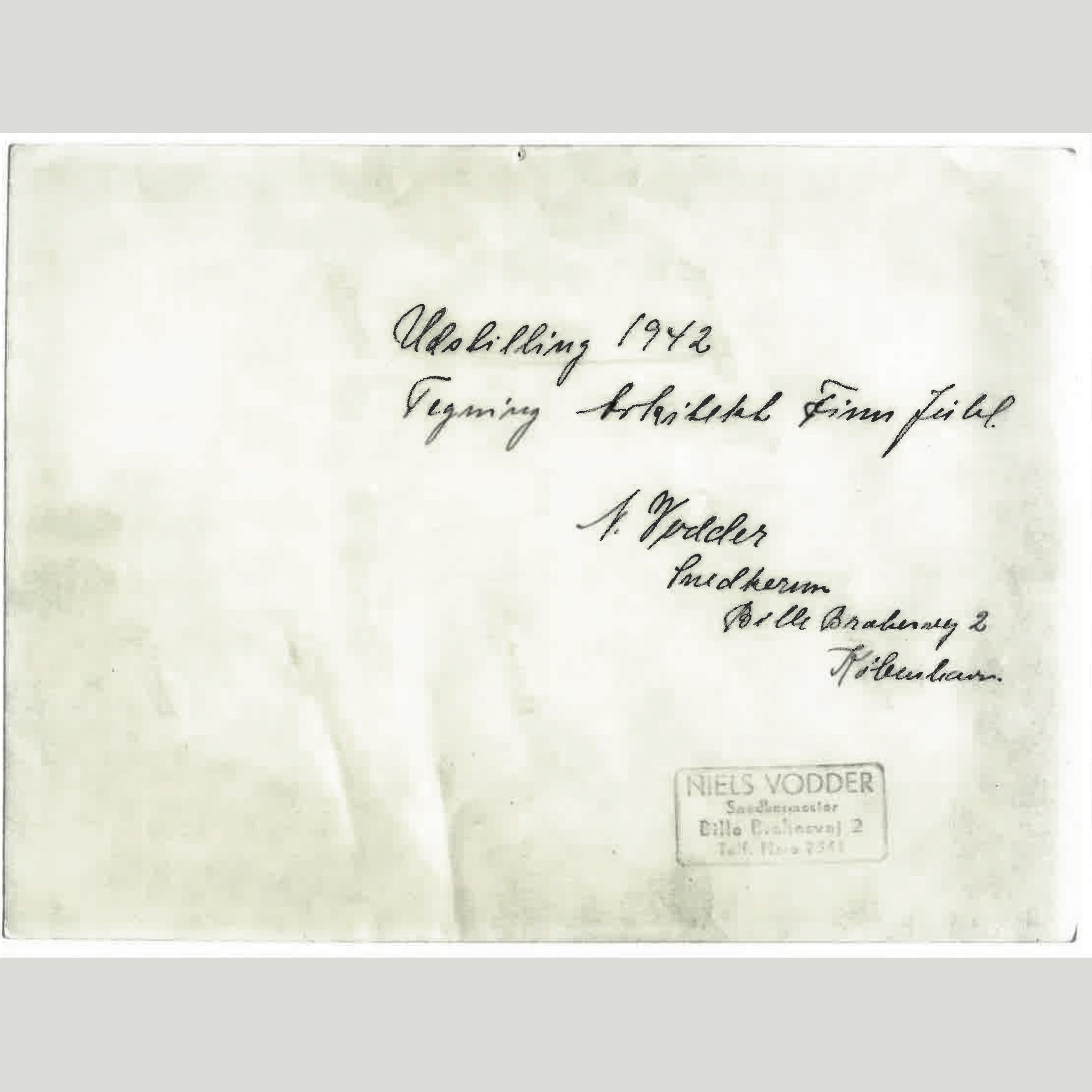
Designed 1941. Made circa 1940’s. By cabinetmaker Niels Vodder.
5 rails height circa 205 cm
10 shelves length 105,5 cm, depth 25 cm (distance front of shelf to wall 26,5 cm)
3 shelves length 138,5 cm, depth 25 cm (26,5 cm)
2 shelves length 138,5 cm, depth 30 cm (31,5 cm)
Height metal sides exterior 15 cm
5 supports for long shelves
The wall unit has now been mounted on a separate wall painted in colours typical fo Finn Juhl.
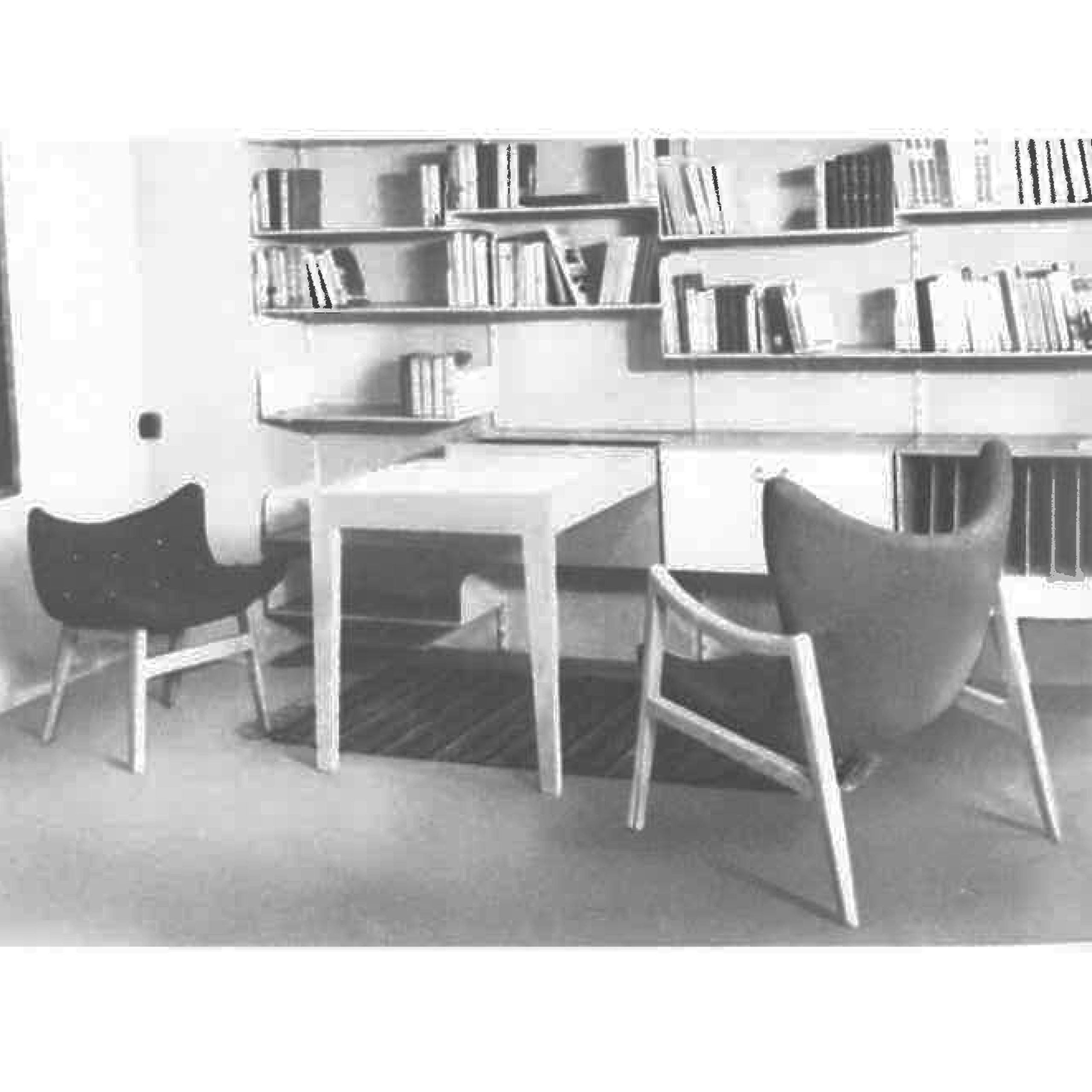
This model wall unit was first presented by Finn Juhl at the Copenhagen Cabinetmaker´Guild´ Exhibtion in 1941 in the booth of Cabinetmaker Niels Vodder otherwise best known for the “Poet Sofa”. And here formed part of a setup that included cabinets, and desk for part wall mounting.
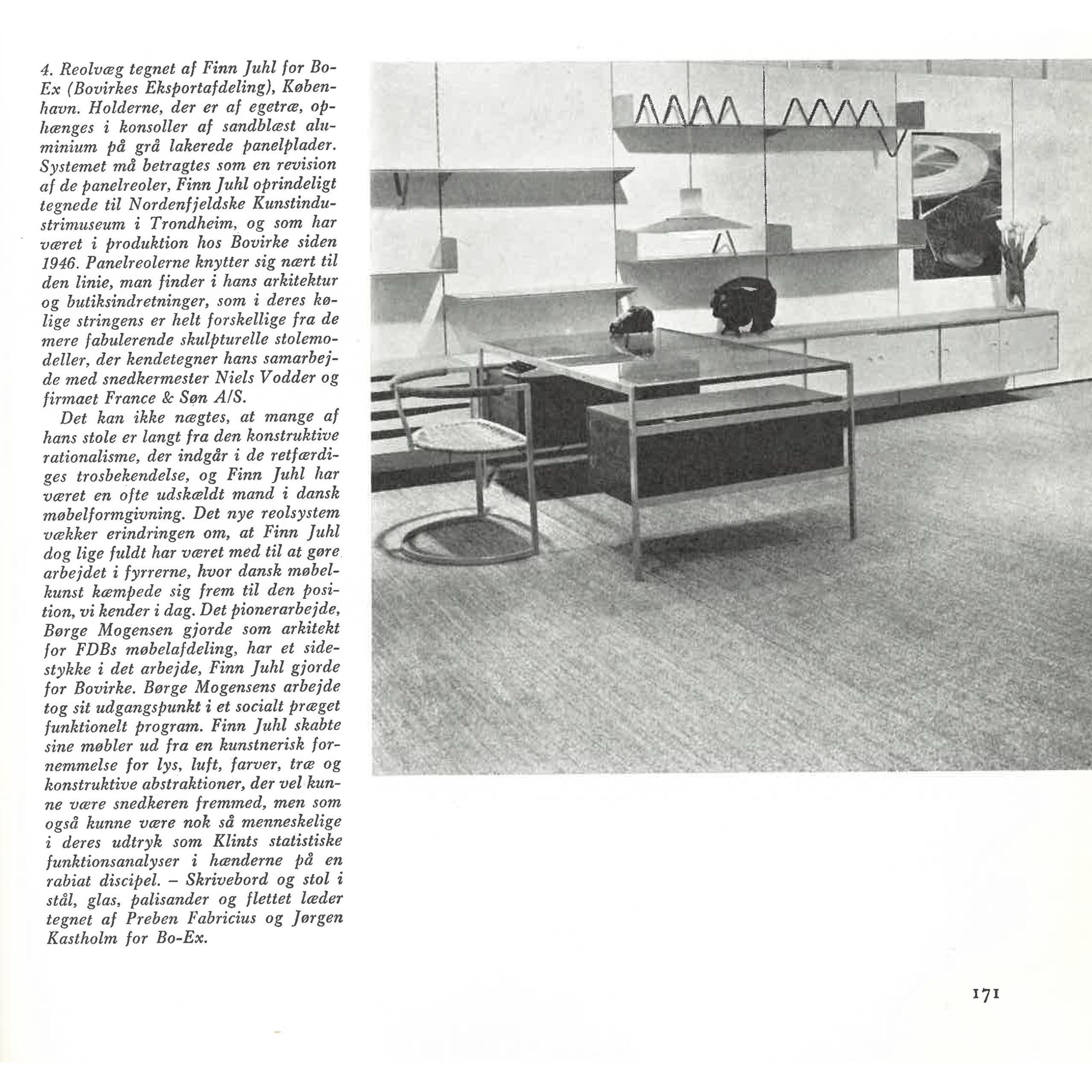
He would later include the wall unit in his 1942 setup also with the guild exhibition. And here to accentuate the idea even designed a small unique box sofa with a form that follows that of the shelves with sides. The wall unit was without any backboards so the rails are clearly visible, but it is a testament to both the restrained modernism always present in Finn Juhl’s work – (sometimes overshadowed by his organic pieces) and the later well-known wall unit system made by Bovirke. As late as 1966 he combined the concealed rails and use of backboards with the slender metal side to the shelves for a new model wall unit for BO-EX here used with the minimal metal furniture of Fabricius & Kastholm. A contemporary critic noted then, that it was far away from the sculptural organic forms found in his chairs, so often scolded by the righteous disciples of rational constructivism. (Arne Karlsen, Børge Mogensen).
But that Finn Juhl always had had deep understanding of the rationality of modernism, and had always made furniture of this nature, but only when they combined with his artistic sense of light, air, colors,, wood, and constructive abstractions, not because they aligned with the statistical functional analysis by some hard-core Kaare Klint Scholar …